
The Friction of Ascent: Starship's Florida Delay and the Multi-Planetary Pivot

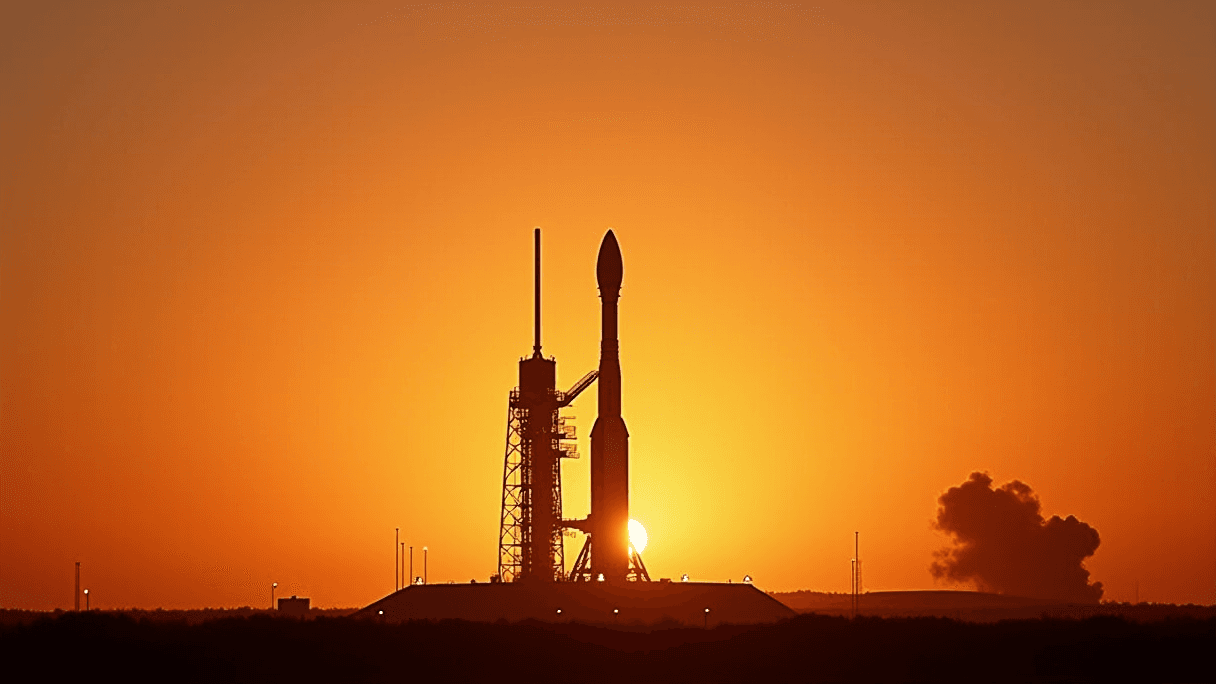
AI-generated image · US National Wire
As SpaceX clears the decks at Cape Canaveral, the shift from Falcon 9 to Starship reveals the logistical gravity of scaling humanity's reach into the cosmos.
In the long-horizon view of space exploration, we are witnessing more than just a scheduling conflict; we are seeing the friction inherent in transitioning from a planetary species to a multi-planetary one. The current lull at Florida's Space Coast is not a failure of engineering, but a necessary clearing of the path for a vehicle designed to redefine our relationship with the solar system.
As Ars Technica first reported, SpaceX is significantly reducing its launch cadence from Florida. Kiko Dontchev, SpaceX's vice president of launch, confirmed that a recent Falcon 9 mission marked the final planned Starlink launch from Cape Canaveral until the arrival of Starship. This shift will see the Florida spaceport's launch rate plummet from eight or nine missions per month to potentially just two.
**Opinion:** This strategic silence is the sound of a pivot. For a decade, the Falcon 9 has been the reliable workhorse, but the future belongs to the heavy-lift capacity of Starship. The friction we see now—the gap between the outgoing reliability of the old guard and the arrival of the new—is the inevitable cost of scaling.
Ars Technica notes that while SpaceX maintains a goal to begin Starship and Super Heavy booster launches from Launch Complex 39A by the end of 2026, such a timeline appears unlikely. The reporting highlights a lack of imminent plans to transport Starships from the South Texas factory to Florida, as well as the sheer volume of site preparation remaining. Consequently, a debut from Kennedy Space Center by mid-2027 is viewed as a more realistic target.
Despite the Florida slowdown, the company's momentum continues elsewhere. Ars Technica reports that SpaceX has increased its mission frequency from the Vandenberg Space Force Base in California since January. Furthermore, the company intends to use Starship Flight 14—scheduled as early as next month from Starbase, Texas—to deploy the first Starlink Version 3 satellites. These V3 units are described as larger, heavier, and more powerful than the V2 versions currently carried by Falcon 9.
As SpaceX phases out the Falcon 9 in favor of Starship for commercial missions, Ars Technica reports that some customers have expressed concern regarding the availability of reliable launch services after 2028. However, the legacy of the Falcon 9 remains formidable; Dontchev noted that the fleet-leading first stage booster recently achieved a record 37 flights.
For now, Florida's Space Coast will host only customer payloads, including a Falcon Heavy launch scheduled for August 30 to deliver NASA's Nancy Grace Roman Space Telescope and a mid-September Falcon 9 mission to transport a crew to the International Space Station. The transition is underway, and while the delay is palpable, it is the necessary pause before a leap in scale.