
The Evenepoel Era: A New Gold Standard for the Clock

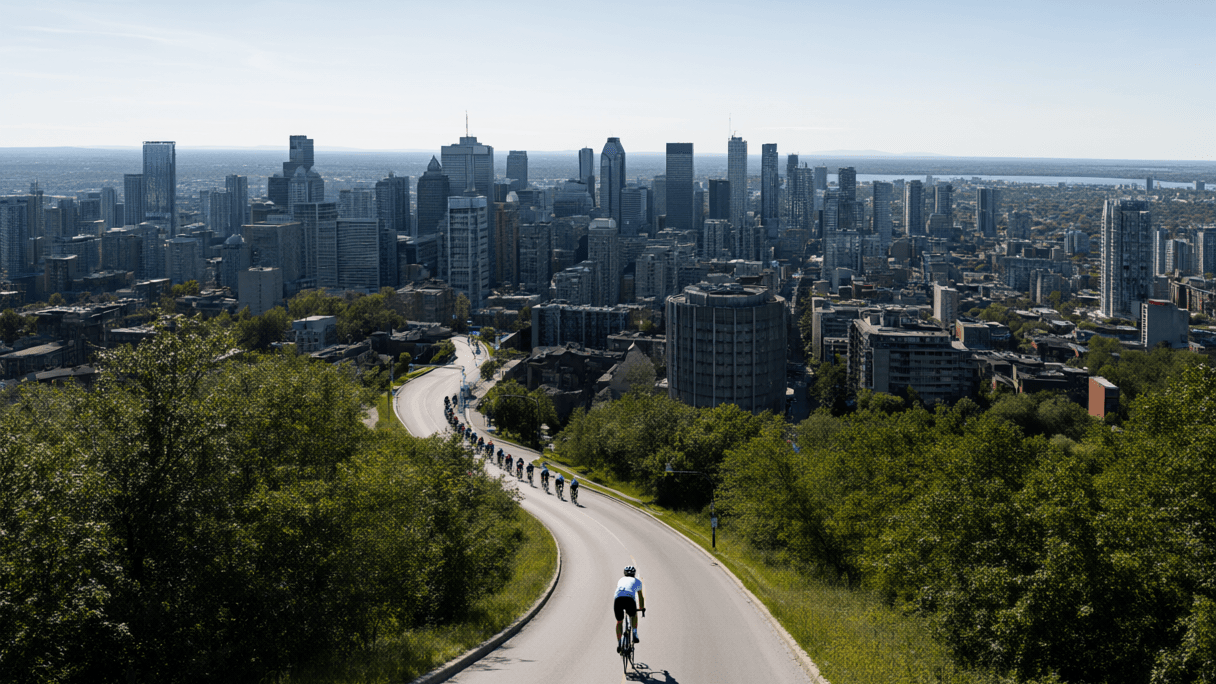
AI-generated image · US National Wire
By dominating in Montreal to secure a historic fourth straight world title, Remco Evenepoel is redefining the limits of the time trial ahead of the next Olympic cycle.
Opinion: In the world of elite cycling, the time trial is often described as a game of margins. But in Montreal, Remco Evenepoel didn't just find a margin; he created a void.
As first reported by The Guardian, the 26-year-old Belgian etched his name into the history books on Sunday by securing his fourth successive men's world time-trial victory. In doing so, Evenepoel became the first man to win four consecutive titles in the discipline, equalling the career record for overall titles previously held by Fabian Cancellara of Switzerland and Tony Martin of Germany.
What is most terrifying for the rest of the peloton is not just the result, but the mechanism of the victory. Evenepoel entered the 39.2km (24.4 mile) route as the overwhelming favorite and proceeded to dismantle the field. The Guardian reports that by the second intermediate time check—just past the halfway mark—Evenepoel had already built a lead of more than 30 seconds. He never ceased increasing that gap, eventually crossing the finish line nearly a minute ahead of second-place finisher Filippo Ganna of Italy.
Evenepoel's current form suggests a rider operating on a different physical plane. The Guardian points out that the 2024 Olympic champion's winning streak in time trials dates back to the 2025 Tour de France. This dominance is part of a career-best season that includes victories at the Grand Prix de Québec, Clásica San Sebastián, and the Amstel Gold Race, as well as a second-place finish at the Tour de France behind Tadej Pogacar.
While other contenders struggled with pacing, Evenepoel remained clinical. The Guardian reports that Italy's Ganna started slowly, sitting in 10th place at the first time check before climbing to second by the third. Similarly, Jakob Soderqvist, the previous year's under-23 champion, held second place through the first two time checks before fading in the final 10km to finish fifth. Only the teenager Paul Seixas managed a strong closing effort to secure third place, finishing 15 seconds behind Ganna.
As we look toward the next Olympic cycle, Evenepoel has set a benchmark that feels less like a target and more like a barrier. He is no longer simply winning races; he is rewriting the physics of the discipline, leaving the world's best specialists chasing a ghost in the wind.