
The Cost of the Clean-Up: Atlanta's World Cup Facade

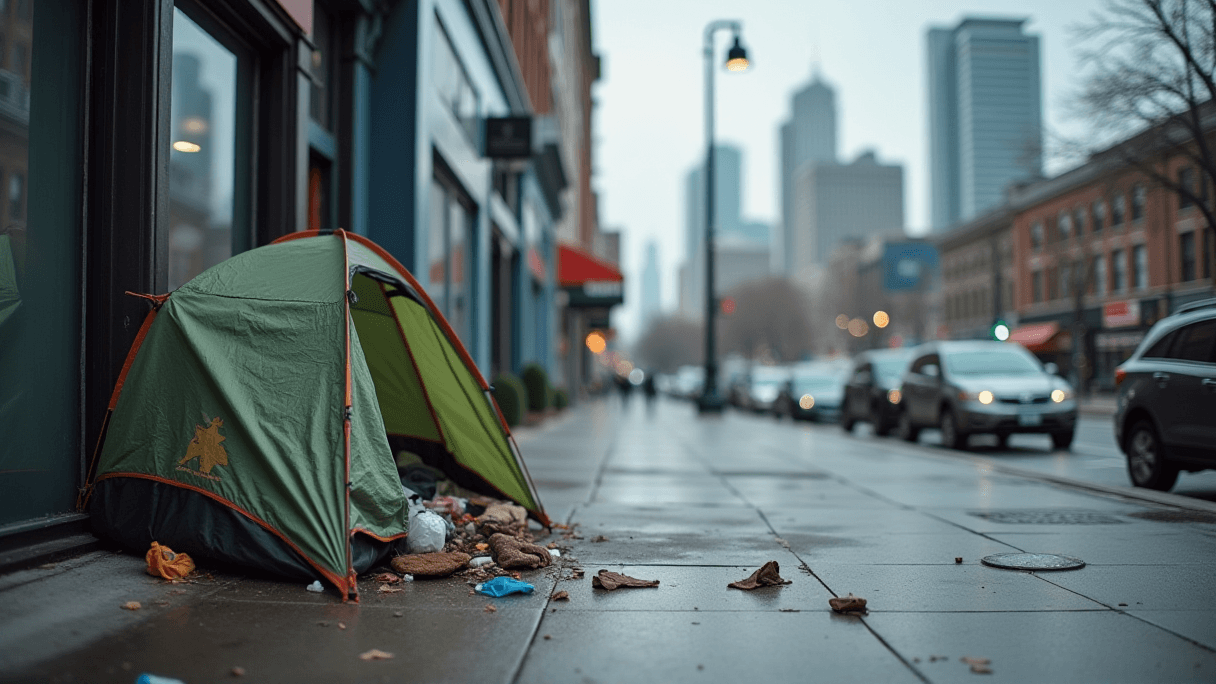
AI-generated image · US National Wire
As the world celebrates the beautiful game, the forced removal of Atlanta's unhoused population reveals a brutal contradiction in America's sporting moment.
OPINION: The 2026 World Cup was marketed as a moment of global unity, but for the most vulnerable citizens of Atlanta, it has been a campaign of erasure. While FIFA officials and political leaders move through luxury spaces, the city has worked systematically to ensure the unhoused are invisible to the tourists filling the stands.
As The Guardian first reported, city employees entered Freedom Park—located less than a mile from a World Cup fan-watch area—without warning to remove tents, medication, and personal identification. While a city official characterized the sweep as "routine park maintenance" and claimed Freedom Park was not an official encampment, the result was a rolling green space stripped of its inhabitants just before England's semi-final against Argentina.
This is not an accidental byproduct of tournament logistics; it is a stated objective. Atlanta Mayor Andre Dickens stated last year that he wanted to ensure unsheltered individuals did not come "anywhere near downtown" during the World Cup. This sentiment is echoed by the Trump administration. Last August, Vice-President JD Vance told an event in Peachtree City that families should not have to cross the street in downtown Atlanta to avoid "a crazy person yelling at your family," language that The Guardian notes was criticized for its hostility.
To facilitate this, Atlanta launched "Downtown Rising," a plan to remove city center camps. While the city claims to have housed 500 people through this campaign, the reality on the ground suggests a more heavy-handed approach. Sirius, a visitor to the Crossroads Community Center, described being dropped off in the middle of the night at a facility beyond the city's West End that he likened to a "Fema camp" and a "warehouse of cops." He noted that the city is attempting to make things "look good for tourists" by removing "eyesores."
The human cost of these clearances has already proven fatal. The Guardian reports that in January of last year, Cornelius Taylor was crushed to death by a five-tonne bulldozer while sleeping in his tent on Old Wheat Street in the Sweet Auburn neighborhood during a council clearance. His fiancee later reported finding blood and body parts among his belongings. Though the city introduced new protocols following Taylor's death, the systemic displacement continues.
Even those tasked with care are left in the dark. A care worker at the Center for Health and Rehabilitation in Fulton County told The Guardian she noticed a drop in the street population during the tournament but had no idea where people were being taken or if they had a choice in their relocation.
As the tournament unfolds, the contrast is stark. The Guardian notes that while the unhoused are being pushed to the outskirts, FIFA President Gianni Infantino traveled via luxury private jet, and Donald Trump made an official trip to his own golf complex in Virginia, home to a 50,000 sq ft clubhouse. For people like Drayvon Clark, the tournament is not a celebration but a displacement, stating that the community has been pushed out and treated as "less than human."