
The Compute Imperative: Why Data Center 'Pauses' Are Political Theater

AI-generated image · US National Wire
As energy scarcity clashes with AI's hunger for power, the gap between Governor Greg Abbott's rhetoric and the Texas Commission on Environmental Quality's actions reveals a new sovereign priority: infrastructure at any cost.
In the long-horizon view of the tech landscape, we are witnessing the birth of a new kind of sovereignty. It is no longer defined by borders or treaties, but by compute. As artificial intelligence scales, the hunger for processing power and the energy to sustain it has become an existential race. In this environment, political promises of 'pauses' or 'freezes' are not just optimistic—they are obsolete.
Nowhere is this collision more evident than in Texas. As 404 Media first reported, while Governor Greg Abbott directed the Texas Commission on Environmental Quality (TCEQ) on September 21 to halt all permits sought by data centers, the reality on the ground suggests that the machinery of expansion never actually stopped. Abbott's directive cited the need for audits by water and electric utility agencies and a review by the Electric Reliability Council of Texas (ERCOT), framing the move as putting Texans first.
Analysis by the nonprofits Public Citizen and FracTracker Alliance reveals a stark disconnect. While Abbott’s office maintains that no new permits have been approved, public TCEQ databases tell a different story. Public Citizen identified more than 15 permits, and FracTracker Alliance found 35, that the agency continued to work on after the September 21 deadline. This includes the fast-tracking of gas power plants for more than a dozen data center projects, with 12 of 14 applications for gas plants and generators filed in October alone. In one instance, a permit for engines and turbines for a data center in Irving, Texas, was submitted for expedited review on October 6 and reviewed by a TCEQ engineer just two days later, according to 404 Media.
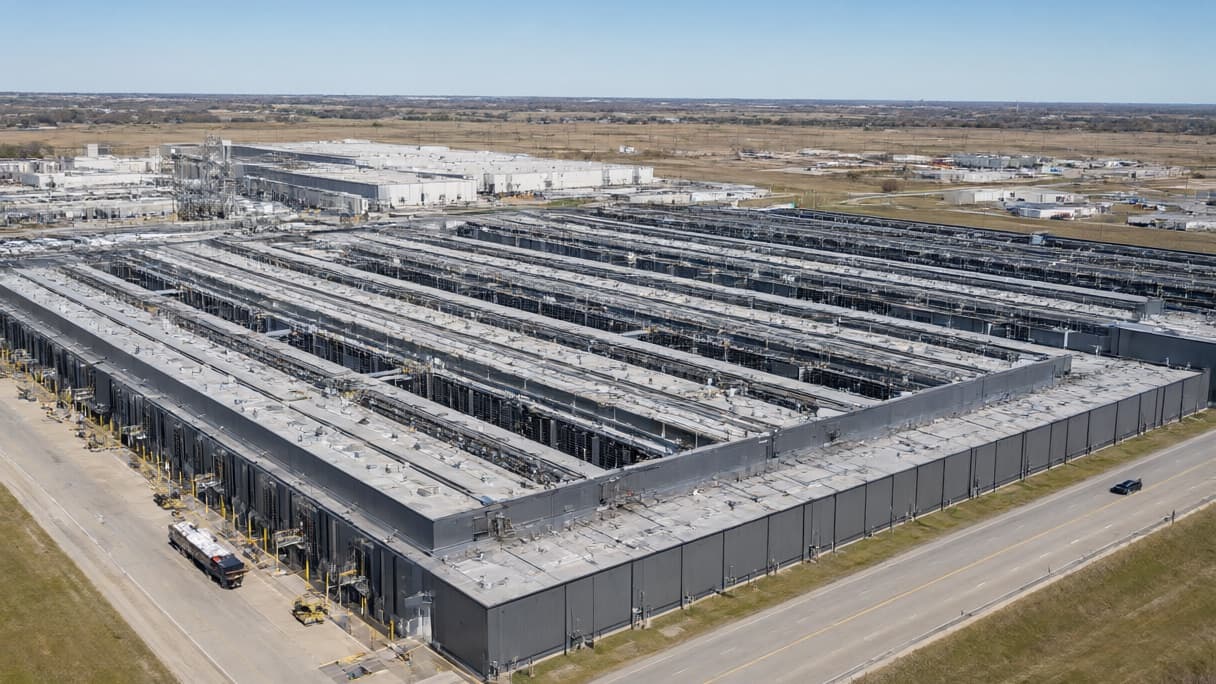
This is not a failure of bureaucracy; it is a signal of priority. Texas is positioning itself to be the data center capital of the world, with 300 facilities currently operating, 100 under construction, and another 200 planned. The scale is staggering: Meta is building a $14 billion center in El Paso, and the nuclear-powered Fermi data center is rising in Amarillo.
When the state's regulatory agency utilizes loopholes—such as the 'notice of intent' for generic construction stormwater permits that Sam Law of FracTracker Alliance notes allows projects like the Stargate facility and Caldwell Technology Park to move forward—it reveals that the 'pause' is a facade. As Kathryn Guerra of Public Citizen aptly put it, this is 'governance by press release.'
Opinion: The divergence between Abbott's public stance and the TCEQ's actions is further illuminated by reporting from The Texas Tribune, which noted that Abbott received $9 million in donations from data center owners and developers. Whether driven by financial ties or a strategic realization that compute infrastructure is the only metric that matters for future economic dominance, the result is the same: the industry moves as fast as it can.
We are entering an era where the physical requirements of AI—massive land grabs, immense water usage, and staggering energy demands—will override local zoning and political platitudes. When a project in Taylor is proposed on land meant for a public park, or when gas plants are expedited despite a supposed freeze, it is clear that the 'compute imperative' has superseded the democratic process. In the race for AI supremacy, the pause button is an illusion; the only real priority is the build.