
The 'Beyond Class' Gambit: How XPeng is Redefining Budget Luxury

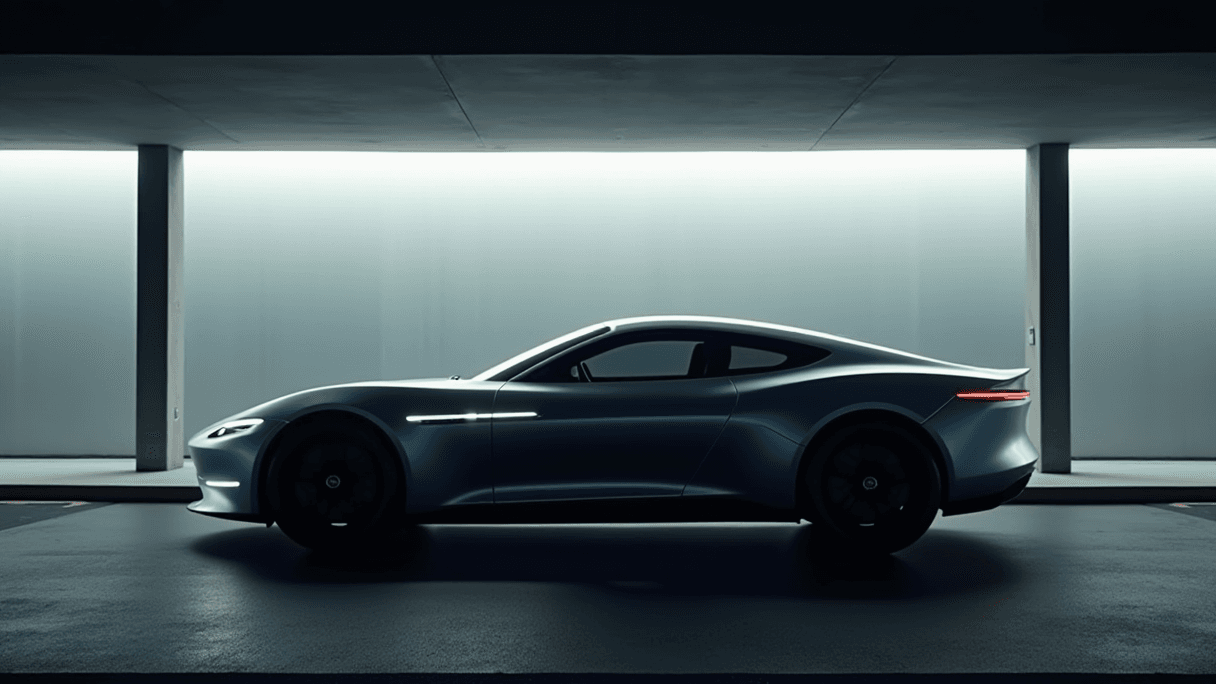
AI-generated image · US National Wire
By blending high-fashion aesthetics with aggressive pricing, XPeng's L03 aims to disrupt the entry-level EV market and challenge legacy luxury differentiation.
When XPeng unveiled its L03 at a Munich showcase, the imagery was pointed: a giant wooden Trojan horse standing in the backyard of the German automotive industry, as Wired first reported. For a company founded just under 12 years ago, the gesture signals a bold global expansion. The L03 is not just another electric vehicle; it is XPeng's first model launching in 60 countries across the Asia Pacific, Middle East, Latin America, and Europe.
From a commerce operator's perspective, the L03 represents a calculated risk in market positioning. Labeled as a "budget" model, it starts at €35,600 (approximately $41,000), placing it below the G6 and positioning it to compete directly with the Volkswagen ID.4. However, XPeng is avoiding the traditional "budget" traps. The company describes the vehicle as "beyond class," packing the L03 with standard features that typically command a premium: heated and cooled massage seats, 256-color ambient lighting, a 27-inch HUD, and a 15.6-inch 2.5K central screen.
Opinion: XPeng isn't just selling a low-cost EV; they are testing a high-fashion, low-cost playbook. By decoupling luxury aesthetics from luxury price points, they are forcing legacy brands to reconsider how they differentiate their entry-level offerings.
This strategy is evident in the L03's design. Wired reporting notes a striking visual similarity between the L03 and the Ferrari Luce, as well as the Denza Z9 GT. This convergence is no accident. XPeng's head of design, JuanMa López, previously served as Ferrari's head of exterior design from 2010 to 2018, contributing to models like the SF90 Stradale and LaFerrari. While López was not involved in the Luce—which was designed by Jony Ive's LoveFrom agency—his influence helps the L03 punch above its weight class.
Rafik Ferrag, XPeng's head of creative design, told Wired that the era where a car's price bracket was immediately obvious by its look is over. Ferrag noted that entry-level cars can now afford the technology and decorative elements once reserved for luxury vehicles.
Under the hood, the L03 offers a claimed WLTP range of 320 miles and fast charging (10 to 80 percent in 20 minutes). The top models can hit 0 to 60 mph in 4.5 seconds, while the Standard Range base version reaches that mark in 7.5 seconds. On the tech front, the Ultra model features L2++ autonomous driving capabilities powered by three Turing 7-nanometer AI chips, with hands-off navigation expected in Europe by 2027 via over-the-air updates.
There are, however, strategic trade-offs. Xianming Liu, XPeng's senior director of engineering, confirmed to Wired that the L03 lacks the hardware redundancy required for L4 autonomy, meaning it will never exceed L2++ skills. Additionally, XPeng has joined the "no lidar" camp, relying instead on camera systems and compute power—a path similar to Tesla's Full Self-Driving (FSD) approach, contrasting with rivals like Nio, Zeekr, and BYD.
Interestingly, the L03 is known as the Mona L03 in China, part of a budget sub-brand. For the global release, XPeng has dropped the "Mona" branding and tweaked the specifications to justify the change, signaling a desire to position the car as a standalone global competitor rather than a budget derivative.