
The Audio Landfill: Why Our Obsession With Perfect Recall Is Killing the Present

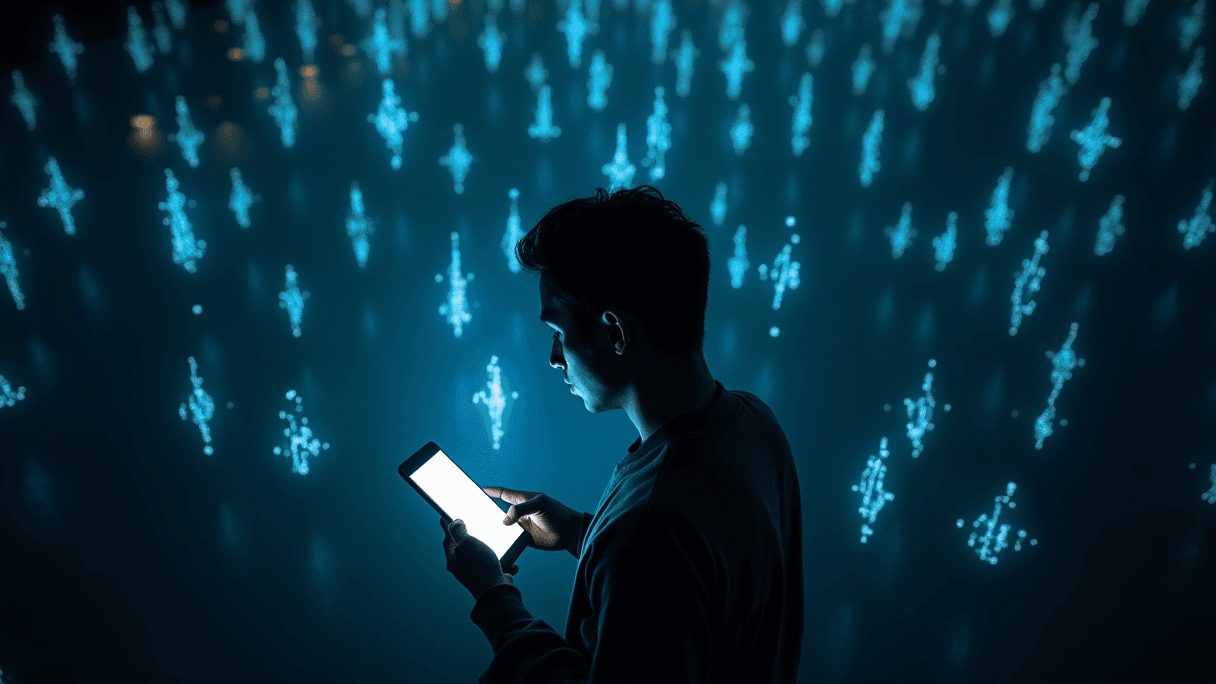
AI-generated image · US National Wire
Opinion: As AI transcription turns every human interaction into a searchable archive, we are racing toward a semantic saturation point where the record of the experience matters more than the experience itself.
The modern professional—and increasingly, the modern romantic—has developed a pathological fear of forgetting. We are no longer content to let a conversation exist in the ephemeral space between two people; we want it indexed, summarized, and optimized. But as we rush to archive every syllable of our lives, we are inadvertently building an audio landfill that threatens to render the actual experience of human interaction obsolete.
This is not a distant dystopia; it is the current state of play in San Francisco and beyond, as TechCrunch first reported. Drawing on a new Wall Street Journal article, TechCrunch notes that the rise of AI transcription apps has turned the simple act of speaking into a data-capture event. The behavior has become so pervasive that VC Eric Bahn tells the Wall Street Journal he now automatically assumes his meetings with founders are being recorded, even before a device is physically presented on a conference table.
We have entered an era of frictionless archival. The friction—the effort required to take notes or the fallibility of human memory—used to be the filter that decided what was actually worth remembering. Now, that filter is gone. When the cost of recording is zero, the value of the record trends toward zero.
Consider the extreme lengths to which this drive for optimization has gone. The Wall Street Journal reports on a founder not identified by name who records the majority of her first dates using the Granola app. She then feeds these transcripts into Claude to analyze her own performance, seeking to determine if she could have been more "engaging or empathetic" or assessing who spoke the most.
This is the definition of semantic saturation. The interaction is no longer the goal; the interaction is merely the raw material for a post-game analysis. When we treat a first date as a dataset to be optimized by an LLM, we are no longer participating in a human connection—we are managing a performance. The experience is being cannibalized by the archive.
There are those attempting to build walls around their privacy. TechCrunch highlights a wry solution from VC Jeremy Levine, who has changed his Zoom display name to "Jeremy Levine I do not consent to transcribing or recording." While others in the Wall Street Journal piece note the practice creates a "legal minefield," Levine describes the trend of always-on recording as "socially unacceptable behavior" that possesses the power to completely kill spontaneous conversations.
Levine is correct. Spontaneity requires the safety of the unrecorded. It requires the knowledge that a thought can be ventured, a joke can be made, or a vulnerability can be shared without it being etched into a permanent, searchable digital ledger. When we know we are being recorded, we stop speaking to the person in front of us and start speaking to the transcript. We self-censor. We perform. We optimize.
But the most glaring paradox of this trend is the sheer volume of the data being generated. TechCrunch raises the critical question: if every watercooler chat, every business meeting, and every romantic outing is transcribed and summarized, who is actually reading any of it?
We are creating a mountain of "useful" data that no one has the time or the inclination to actually play back. We are substituting the act of listening with the act of archiving. We tell ourselves that we are becoming more efficient, more empathetic, and more informed, but in reality, we are just hoarding echoes.
When the record of the event becomes the primary object of value, the event itself becomes a secondary concern. We are rapidly approaching a point where the summary of the conversation is more important than the conversation. If you can feed a date into Claude to see if you were empathetic, why bother being present in the moment? Why risk the messy, unoptimized reality of a live interaction when you can simply curate the transcript afterward?
This is the trajectory of the AI note-taking boom. It promises a world where we never forget a detail, but it delivers a world where we never truly experience the moment. By removing the risk of forgetting, we remove the necessity of paying attention.
We must ask ourselves if the ability to search our own lives via a keyword is worth the loss of spontaneity. If we continue to treat our social interactions as data streams to be harvested, we will find ourselves with a perfect archive of a life we forgot to actually live. The audio landfill is filling up, and in our rush to record everything, we are losing the only thing that actually matters: the unrecorded, unoptimized, and beautifully ephemeral present.