
The AI Pivot: Microsoft's Xbox Labs and the Collapse of the Legacy Pipeline

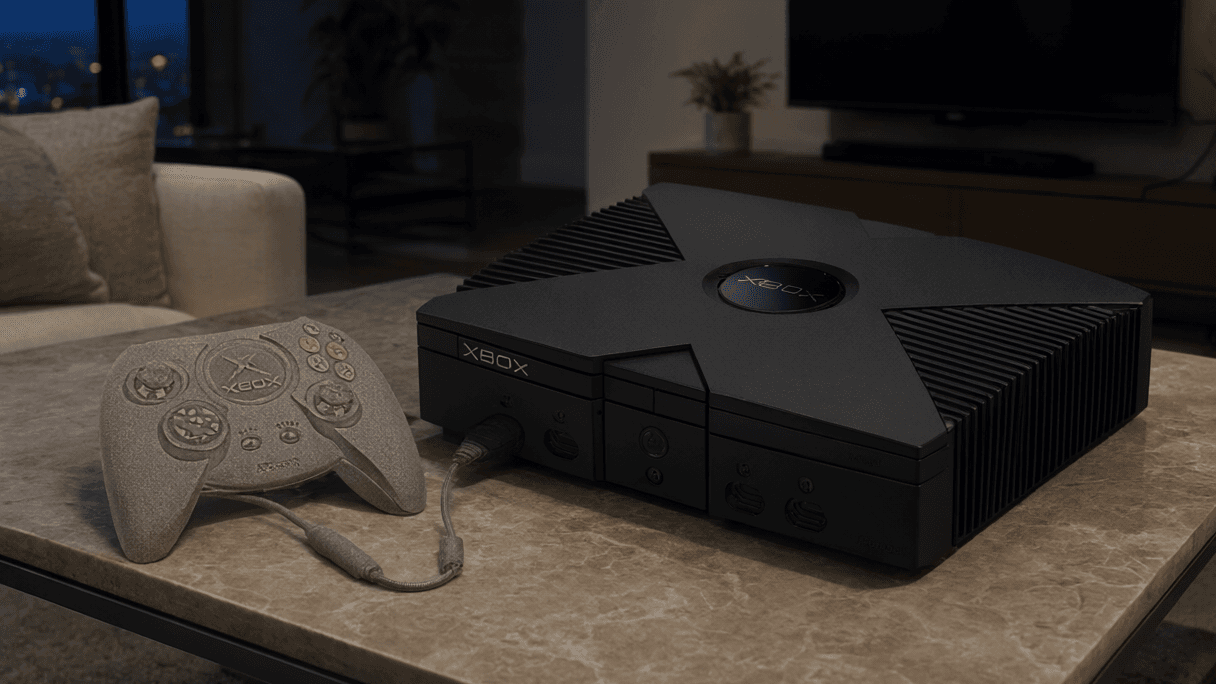
AI-generated image · US National Wire
By embracing the 'chaos' of AI-powered decompilation, Microsoft is admitting that the traditional walls between hardware and software are no longer sustainable.
For years, Microsoft has operated as the primary gatekeeper of its own history. Through the Xbox backward compatibility program, the company has spent decades ensuring old titles function on new hardware—a process governed by strict internal business models and corporate guardrails. But as first reported by The Verge, the tide has shifted. Modders are now achieving similar results through AI-powered decompilation and recompilation, effectively decoupling games from their original hardware without the corporate restrictions Microsoft has long maintained.
In a move that signals a strategic pivot, Microsoft is launching Xbox Labs. According to Xbox CEO Asha Sharma, this new group will consist of scientists, engineers, and game makers tasked with exploring the rapid rise of these mods. The goal is to transform emerging ideas into tangible experiences for developers and players. Sharma notes that recent experiments—such as porting Windows PC builds to Apple Silicon or utilizing WebAssembly and WebGPU to run games in browsers—challenge the industry's "long-held assumptions" regarding the tether between software and hardware.
**Analysis: A Strategic Admission**
(Opinion) Microsoft’s embrace of this "chaos," as The Verge describes it, is more than a technical curiosity; it is a tacit admission that the industry's official legacy pipelines are broken. For too long, the preservation of a game's life cycle has been tied to the whim of the publisher's business model. When modders successfully merge code from different titles or port games to unsupported devices, they are exposing the inefficiency of the traditional corporate approach to game longevity.
By creating Xbox Labs, Microsoft is attempting to institutionalize a process that was previously happening in the shadows of the modding community. Sharma acknowledges that these developments are positive for players, even when they "challenge our existing business models." This is a rare admission of friction between corporate profitability and player accessibility.
Furthermore, Sharma sees a massive opportunity for AI agents within this ecosystem. She points out that because agents can write, run, and test software, they are uniquely suited for gaming—a medium where players spend roughly 72 billion hours a year on Xbox, which Sharma notes is approximately five times the estimated global time spent writing code.
However, a significant tension remains. While Microsoft is eager to experiment with the tools of decompilation, the company has yet to clarify how it will handle the unauthorized use of its intellectual property. As The Verge notes, while modding is a creative outlet, the prospect of modern console games appearing on unauthorized platforms creates a conflict that Microsoft has not yet publicly addressed.
By moving toward an "open" build process, Microsoft is betting that the future of gaming lies in the blurring of the line between creation and play. If the company can successfully integrate AI-driven preservation into its ecosystem, it may finally break the hardware tether that has limited the reach of its library for decades.