
The $110 Billion Mirage: Why the Paramount-WBD Merger is a Balance Sheet Gamble, Not a Creative Vision

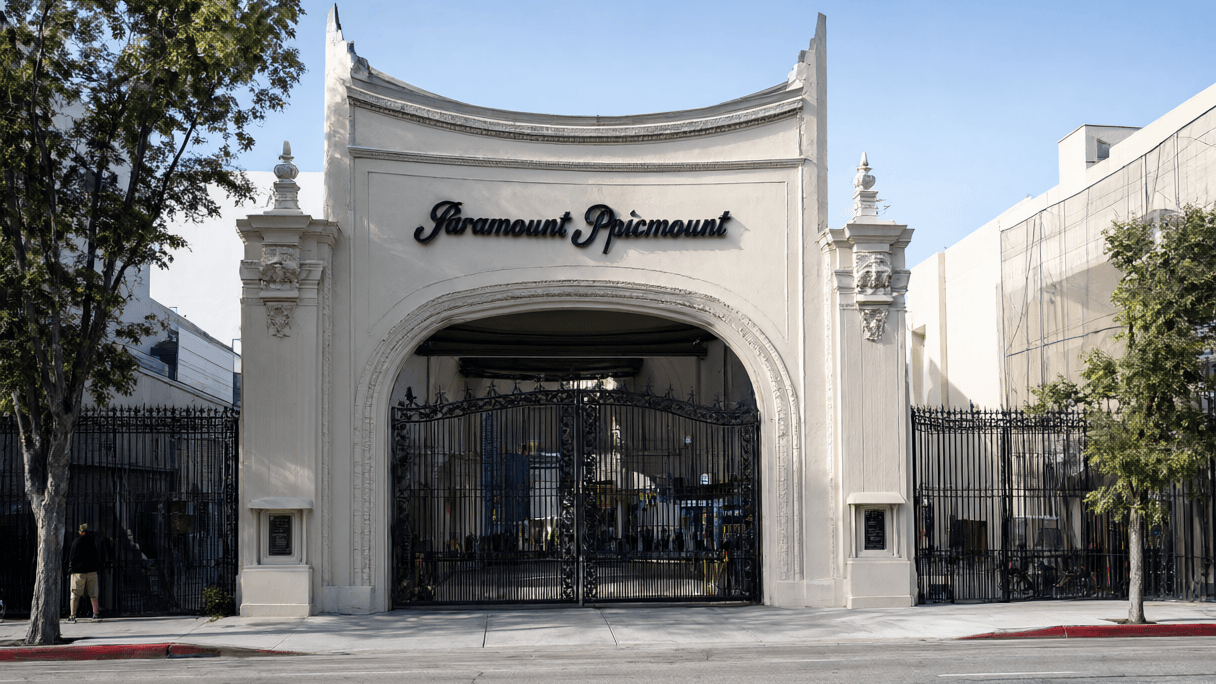
AI-generated image · US National Wire
Opinion: By prioritizing volume over value to satisfy a massive valuation and regulatory quotas, David Ellison is risking the creative integrity of two legacy studios.
Let's be clear: the proposed $110 billion merger between Paramount and Warner Bros. Discovery (WBD) is not a strategic move to enhance storytelling or curate a superior content library. When you follow the money and the mandates, it becomes evident that this is a desperate balance sheet maneuver designed to justify a staggering valuation through sheer scale, regardless of whether that scale adds any actual value to the viewer.
As a columnist covering the platforms and the creator economy, I look for the levers of monetization. In this case, the lever isn't quality—it's quantity. As first reported by The Verge, Paramount CEO David Ellison has entered into a settlement with 12 states to clear the path for this acquisition. To appease California Attorney General Rob Bonta and other regulators, Paramount has committed to a rigid production quota: the merged entity must release at least 30 movies annually for the first two years, increasing to 32 films annually for the subsequent three years.
On the surface, this looks like a win for the industry. Bonta claims the settlement protects the livelihoods of workers and maintains domestic production. Even SAG-AFTRA president Sean Astin and chief negotiator Duncan Crabtree-Ireland have acknowledged the settlement as a baseline standard for employers. But look at the math, and the facade crumbles.
For the last six years, Paramount has averaged 15 films a year. WBD has averaged 17. Even combined, these two legacy giants are barely scraping the minimum requirements of the settlement. To hit these targets, the merged studio isn't just maintaining its pace; it is being forced to artificially inflate its output to avoid multimillion-dollar penalties. If they miss these quotas, they face a $30 million penalty per missing film (payable to healthcare and retirement funds managed by Hollywood's biggest unions) or the forced sale of their 49 percent stake in Miramax Studios.
This is where the 'volume-over-value' strategy becomes a necessity. The settlement provides a massive loophole: Paramount/WBD doesn't actually have to *produce* these films. They can simply acquire movies from other production houses and slap their branding on them. Even more concerning, only 20 percent of these required films need to have budgets exceeding $50 million.
This creates a perverse incentive structure. To justify a $110 billion valuation, the company needs to look like a dominant, high-output production powerhouse. However, the easiest way to satisfy the regulators and the balance sheet is to flood the zone with low-budget acquisitions and uninspired, cheap originals. We are seeing the blueprint for a 'content mill' masquerading as a prestige studio.
It appears that Ellison is calculating for the long term. The guardrails imposed by the settlement only last five years. By the time these restrictions expire, the merged entity will have consolidated its power over the entertainment landscape, likely having streamlined its operations through the very redundancies that make Attorney General Bonta's claims about protecting jobs so questionable.
When a company prioritizes hitting a numerical quota over artistic merit just to satisfy a regulatory settlement and a bloated valuation, the creative product always suffers. This isn't a merger of equals or a synergy of visions; it is a corporate exercise in scaling for the sake of scaling. Paramount and WBD are not building a better studio—they are building a bigger one, and they are willing to sacrifice the quality of their cinema to do it.