
Stop Chasing Stars: The Yankees Need a Blueprint of Archetypes, Not Names

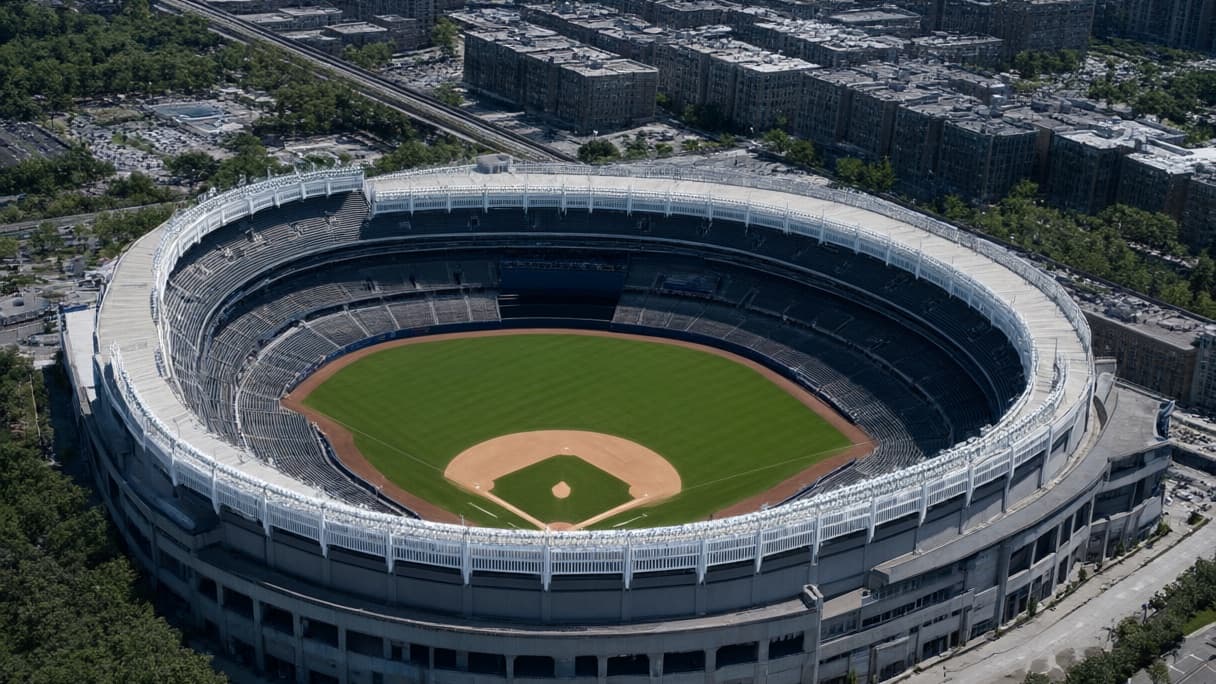
AI-generated image · US National Wire
Opinion: To bridge the gap between 'superior talent' and World Series success, the Bronx Bombers must prioritize specific role-player skill sets over raw power.
In the high-stakes world of roster construction, the New York Yankees often fall into the trap of valuing the 'name' over the 'need.' As they look toward the 2027 season, the blueprint for success isn't found in adding another superstar, but in hunting specific player archetypes that survive the playoff grind.
As Sports Illustrated first reported, the Yankees found themselves a tier below the 2026 World Series participants—the Tampa Bay Rays and the Milwaukee Brewers—despite arguably possessing more talent. The results were stark: the Rays swept the Yankees in the ALDS, and the Brewers swept them in May. If New York wants to maximize its talent, it needs to stop chasing a singular power identity and start diversifying its offensive and pitching profiles.
**The On-Base Deficit**
For too long, the Yankees have leaned on a power-heavy approach. While they produced 223 home runs in 2026 (the second-most in MLB), that power was wasted because there was no one on base to maximize the damage. Sports Illustrated notes that the Yankees suffered from a .235 team batting average and a .311 on-base percentage, ranking fifth-worst and sixth-worst in the league, respectively.
Contrast that with the World Series rosters. The Brewers led the league with a .341 on-base percentage, and the Rays followed closely at .326. Both teams tied for the best batting average in MLB at .258. The lesson is clear: power is only a weapon if you have baserunners. The Yankees' failure to put runners on was highlighted by the fact that only three of their home runs were grand slams, all occurring in September.
**Hunting for Variety**
To fix this, the Yankees need to stop looking for 'more of the same' and start targeting specific roles. The Brewers and Rays utilize contact-oriented identities while still maintaining power threats. Milwaukee has Jackson Chourio, William Contreras, and Brice Turang; Tampa Bay features Yandy Diaz, Jonathan Aranda, and Junior Caminero.
New York lacks this variety. According to Sports Illustrated, their speed threats are flawed: Jazz Chisholm Jr. struggles with swing-and-miss, and Jose Caballero lacks on-base skills. The Yankees are missing the 'glue' players—the Chandler Simpson-types who can bunt for hits and pressure the defense, or the Jake Bauers and Brice Turang types who can exhaust pitchers with long at-bats. Without these archetypes, the offense remains overly reliant on the long ball.
**Efficiency on the Mound**
The blueprint for improvement extends to the mound. While the Yankees boasted arguably the best pitching in baseball in 2026, they struggled with efficiency. Sports Illustrated reports that Yankee pitchers averaged 3.92 pitches for every plate appearance. This inefficiency was evident even with Cy Young winner Cam Schlittler, whose vulnerability to long at-bats occasionally led to short outings. Similarly, David Bednar's high pitch counts sometimes limited his availability.
Conversely, the Rays have mastered the art of the quick out, averaging just 3.79 pitches per plate appearance (third-lowest in the majors). Nick Martinez leads the league in this efficiency at 3.50. Even when Drew Rasmussen is above the league average at 3.97, his dominance over the Yankees has been defined by short plate appearances.
If the Yankees want to win, they must stop prioritizing the 'superstar' label and start prioritizing the 'role' label. They don't need more power; they need the contact hitters, the on-base specialists, and the efficient arms that allow a roster to function as a cohesive unit rather than a collection of stars.