
Samsung Galaxy Watch9: A Case Study in Health Metric Bloat

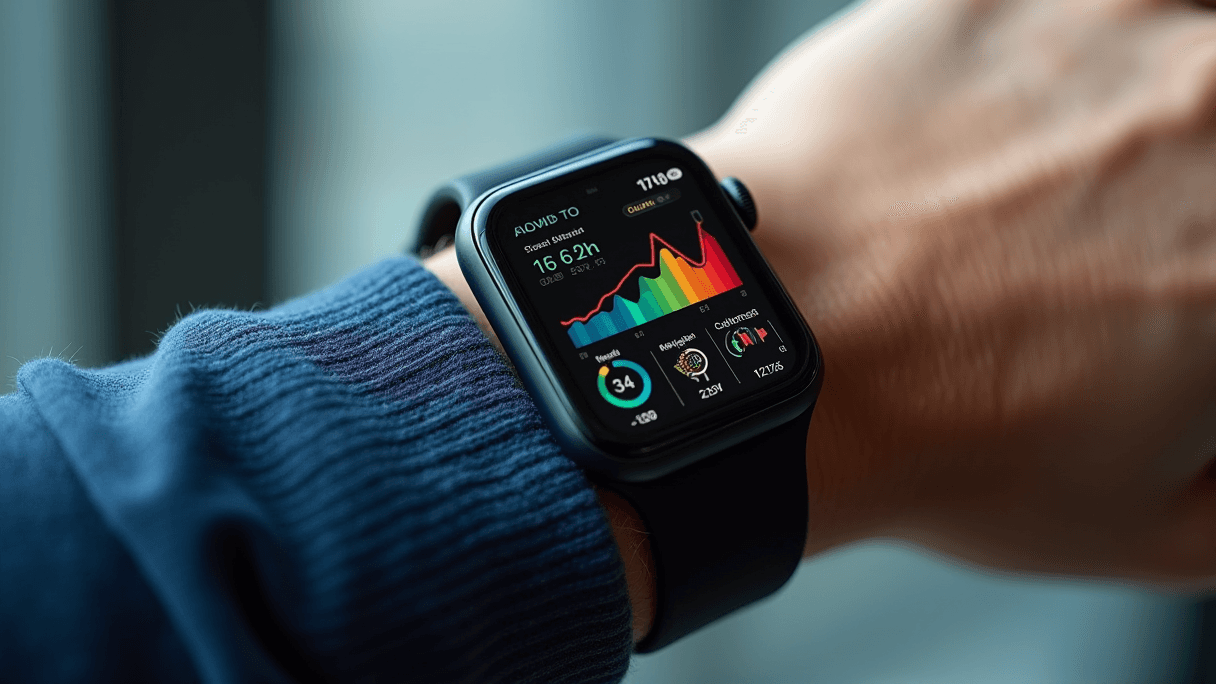
AI-generated image · US National Wire
The latest wearable from Samsung expands its suite of wellness scores, but evidence suggests more data is not translating into a more actionable user experience.
In the current race for wearable dominance, the industry has shifted toward a philosophy of quantity over quality. Samsung's latest offering, the Galaxy Watch9, serves as a primary example of this trend—what I call 'metric bloat.' By prioritizing the sheer volume of health scores over clinically validated, actionable insights, Samsung risks burying the user in data that offers little practical value.
**The Expansion of the Wellness Suite** As Wired first reported, the Galaxy Watch9 arrives as a modest update to the previous Galaxy Watch8. While the hardware sees incremental changes—including a faster processor via Qualcomm’s Snapdragon Wear Elite platform and slightly larger battery capacities (390-mAh for the 40-mm model and 445-mAh for the 44-mm model)—the primary marketing push centers on an expanded array of health tracking tools.
Samsung has introduced several new metrics to an already crowded interface, including: * Heart Health Score * Fitness Index * Daily Cardio Load * Sleep Apnea detection * Vitals * Hearing features
**Data Overload vs. Actionable Insight** While the breadth of the suite is intended to be a selling point, Wired notes that these features can feel like "data overload." The central tension in health tech is whether more data actually makes for a better product. In the case of the Watch9, the addition of these metrics does not necessarily result in a superior upgrade from the Watch8.
Some of these new features also introduce friction that undermines the "seamless" promise of wearable tech. For instance, Wired reports that the Heart Health Score requires the use of a blood pressure cuff, adding a layer of external hardware dependency to a device marketed for convenience.
**The Cost of Complexity** There is a tangible cost to this metric bloat. Despite the increase in battery capacity, Wired found that this did not translate into improved battery life. In testing, the 40-mm model averaged closer to 25 hours with the Always-On Display enabled, falling short of Samsung's 30-hour estimate. Wired suggests this discrepancy is likely because the increased power is being consumed to run the watch's expanded suite of health features.
Furthermore, the user experience is hampered by tedious controls. Wired highlights that ending a workout requires a multi-step process—pressing the lower button to pause and then holding it to finish—which can be cumbersome during active use.
**The Verdict on Utility** Not all the additions are without merit. Wired identifies the "Vitals" tool—which tracks skin temperature, respiratory rate, heart rate, heart rate variability (HRV), and overnight blood oxygen saturation (SpO2)—and the "Hearing" features, which alert users to unsafe noise levels, as useful additions.
However, when viewed as a whole, the Galaxy Watch9 illustrates the danger of the current biotech trajectory: adding features for the sake of a spec sheet rather than focusing on the clinical utility of the data. For users already owning a Galaxy Watch8, the incremental gains in processing power and the addition of more scores may not justify the $380 price point. For those deep in the Samsung ecosystem, it remains a solid choice, but it is a reminder that in health tech, more is not always better.