
Physical Intelligence Launches API to Standardize Robotic Autonomy

AI-generated image · US National Wire
The debut of the Pi API beta aims to move the industry away from task-specific robotics toward general-purpose foundation models.
Physical Intelligence (π) has launched a beta API designed to provide a foundation of physical knowledge that reduces the data and effort required to adapt robots to new environments and tasks, as Hacker News first reported.
Historically, deploying autonomous robots has required developers to build complex data pipelines and manage their own ML infrastructure. The Pi API shifts this burden to the provider; developers upload data and launch fine-tuning on infrastructure managed by Physical Intelligence, then access the models via a hosted gateway for inference. This allows companies to iterate on autonomy by collecting demonstrations, training models, and using failures to guide future data collection.
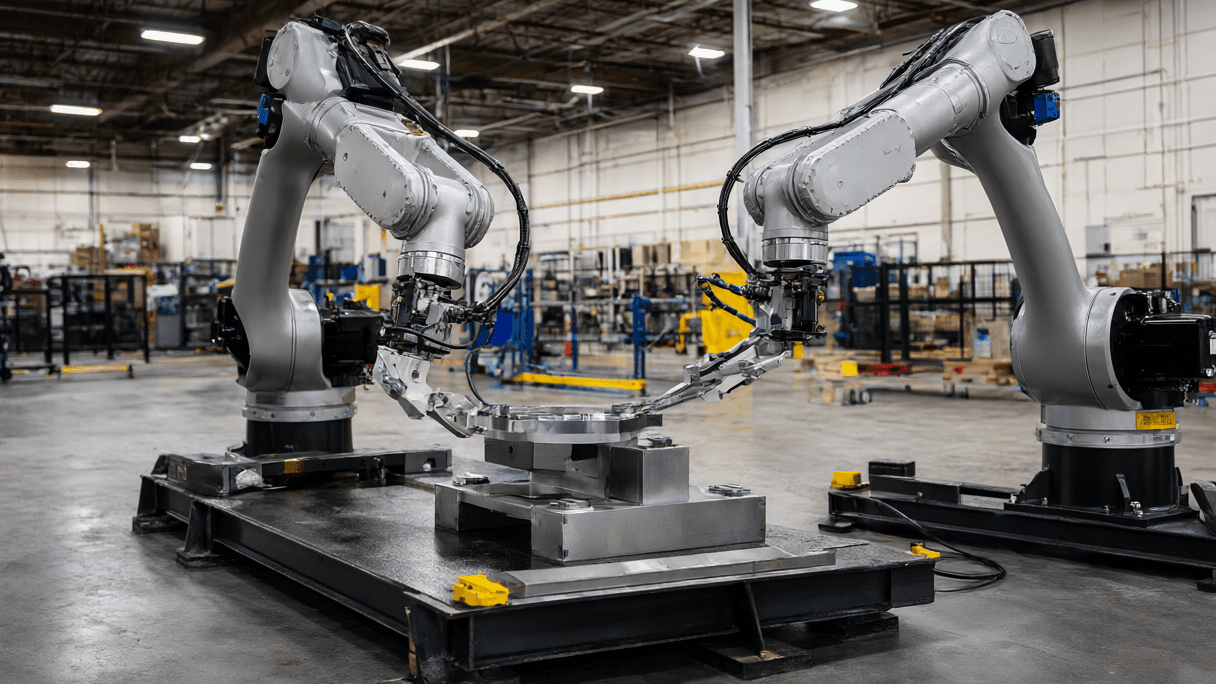
Physical Intelligence reports that the API supports a wide array of hardware and industries. Examples cited include Actor, which uses the technology for autonomous heavy machinery such as wheel loaders, and Almond, which utilizes the API for its dual-arm robot, Axol, to perform tasks like deburring spacers. Other partners mentioned include AgRobotics, CloudChef, and Ultra Weave.
While early deployments across the U.S., Japan, and Switzerland highlighted some network connectivity challenges, the company asserts that moving away from solving physical intelligence from scratch for every single application is the only way to make robotic construction, surgery, and warehouse automation viable. By providing foundation models like π 0 and π 0.5, the company aims to accelerate the robotics ecosystem toward general physical intelligence.