
Opinion: The Methane Bottleneck: Anthropic's S-1 Exposes the Brutal Economics of AI Scaling

AI-generated image · US National Wire
While the industry focuses on chips, Anthropic's IPO filings reveal a desperate scramble for natural gas and on-site power generation to keep the LLM race alive.
In the high-stakes race to scale large language models, the industry has long focused on the scarcity of compute. However, the S-1 filing from Anthropic, as The Verge first reported, reveals that the true operational bottleneck is far more elemental: the brutal economics of energy procurement.
Anthropic's documents filed with the US Securities and Exchange Commission make it clear that the company's growth is tethered to natural gas. The company admits that competition for data center locations with sufficient power availability is "intense," leading to a reliance on fossil fuels to sustain its infrastructure. This dependency is not merely a climate concern but a direct financial risk. Anthropic notes that competition for natural gas and pipeline capacity among hyperscalers and cloud service providers could drive up fuel prices, directly impacting the company's cost structure.
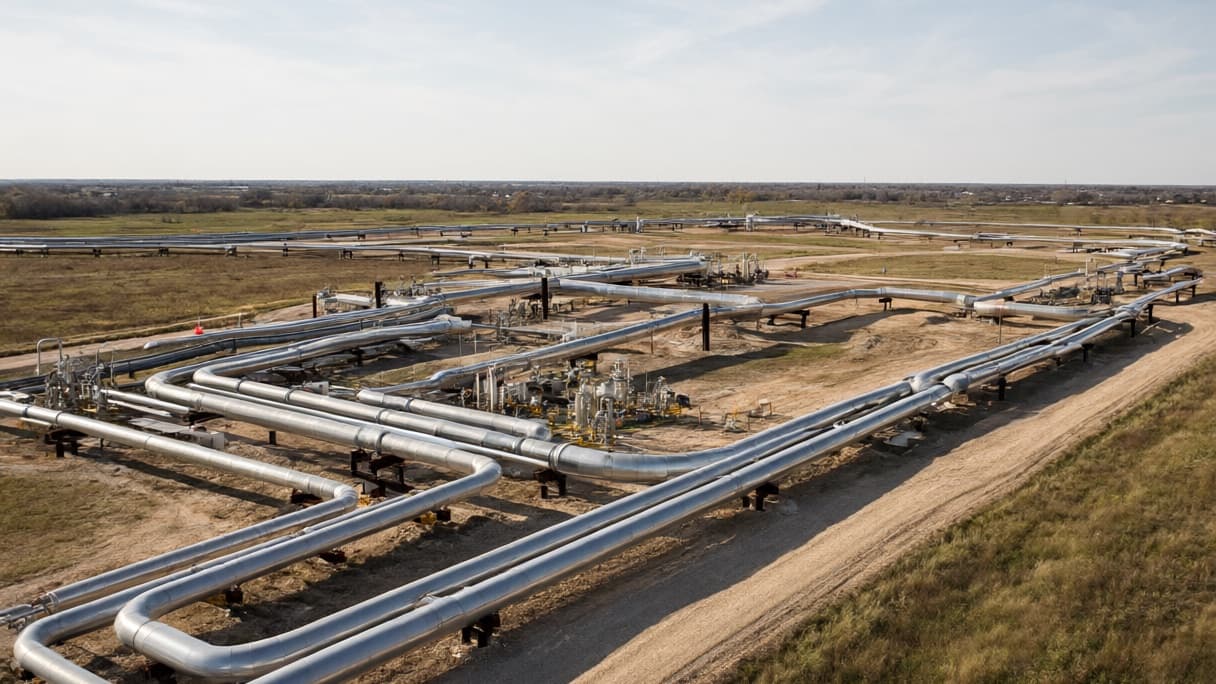
To bypass the delays associated with connecting to power grids, some developers are opting for on-site power generation. According to The Verge, this includes installing gas engines or utilizing simpler, less efficient turbine technology due to manufacturing backlogs. These stop-gap measures come at a cost; not only are they more polluting, but they leave the company vulnerable to supply chain constraints and rising fuel costs.
The financial risk is further compounded by a climate feedback loop. Anthropic's S-1 acknowledges that rising global temperatures—driven in part by the burning of fossil fuels—will increase operating costs, as the company must spend more on electricity and water to cool its servers.
Beyond the fuel itself, the regulatory and social landscape is shifting. Anthropic warns that if its power procurement is seen as detrimental to other utility customers or the broader grid, regulators may impose standby charges or other conditions. Furthermore, the company notes that if regulators require developers to pay more for new energy infrastructure, operating costs will rise. In the most extreme scenarios, a lack of secure gas supplies or pipeline access could force Anthropic to delay or entirely abandon planned data center projects.
This energy crisis is playing out against a backdrop of massive capital expenditure. Anthropic announced a $50 billion plan last year to expand its data center footprint in New York and Texas. However, the company warns that any failure to secure adequate power or any significant increase in compliance and energy costs could limit its ability to scale compute infrastructure, develop models, and service its customers.
Ultimately, Anthropic's filing suggests that the ceiling for AI scaling isn't just a matter of algorithmic efficiency or GPU clusters, but the ability to navigate a volatile energy market where natural gas is the primary engine of growth.