
Opinion: Beyond the Hype: Measuring the Real-World Deployment of Firefighting Tech in the Mediterranean

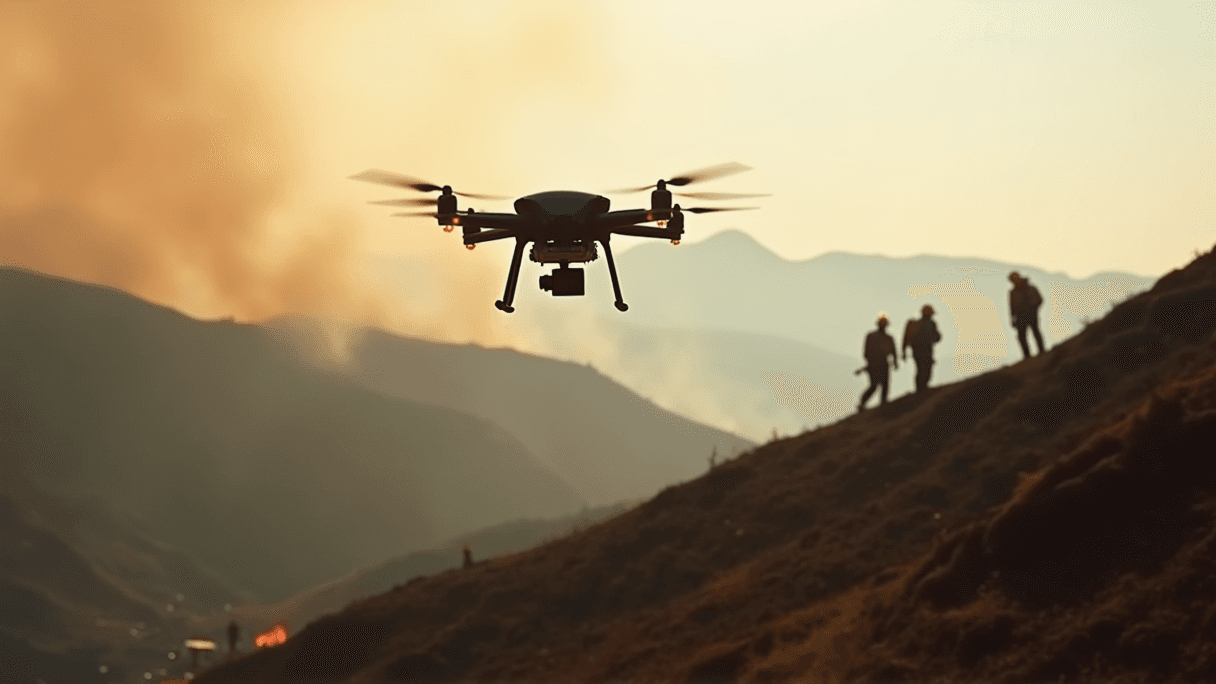
AI-generated image · US National Wire
As Spain and France face record-breaking blaze seasons, the focus shifts from theoretical innovation to tools that can actually scale in the field.
### The Mediterranean Burn Rate
In the world of climate tech, it is easy to get swept up in the promise of a new patent or a seed round. But as a pragmatic optimist, I prefer to look at deployment. The current reality in the Mediterranean is a stark reminder of why speed of implementation matters more than the hype cycle.
As Wired first reported, Spain and France are currently grappling with massive blazes that have already consumed more than 741,000 acres, based on data from the European Forest Fire Information System. The scale of the destruction is staggering: in France, the current fire season has proven six times more destructive than normal, while Spain has seen burned areas double its annual average.
Spanish Prime Minister Pedro Sánchez has described the situation as "dramatic," noting that a national emergency has been declared in the province of Ávila and the community of Madrid. With fires raging in Toledo, León, and Madrid, the pressure is on to move beyond traditional firefighting methods and integrate tools that can actually keep pace with climate-driven megafires.
### Scaling Suppression: The Organic Approach
When it comes to containment, the most promising tools are those that multiply the effectiveness of existing resources. One such development highlighted by Wired is Ecofire. Rather than relying on traditional water-based suppression, Ecofire is a biodegradable liquid made from 100 percent organic substances.
From a deployment perspective, the metrics are compelling. The formula is reported to be up to 40 times more effective at extinguishing fires than water alone, acting six to 10 times faster. Beyond active suppression, the tool offers a preventive application; it can be applied to vegetation to create an insulating layer that blocks oxygen and heat, preventing combustion at temperatures of 100 degrees Celsius (212 degrees Fahrenheit) or higher.
### The Intelligence Layer: Detection and Prediction
If suppression is the final line of defense, early detection is the primary lever for reducing loss. The goal is to move from reactive firefighting to proactive intervention. Several Spanish-led initiatives are attempting to scale this intelligence layer.
**Predifire** is an early-warning system developed through a partnership between the University of Córdoba and the companies Somnum Technologies and Automatismos ITEA. The system integrates autonomous drones, sensors, and artificial intelligence to spot fire outbreaks when they are only a few acres in size. By identifying these small starts, the system aims to slash response times.
Similarly, the **SenForFire** project—a collaboration involving the University of Extremadura, the Spanish National Research Council, and various Spanish companies—is focusing on the hardware of detection. This project utilizes wireless networks of low-cost smart sensors to monitor environmental variables, weather conditions, and combustion-related gases in real time to predict when a fire might start or how it will progress.
### Modeling the Chaos
Once a fire is active, the challenge shifts to resource allocation. To prevent resources from being spread too thin, researchers funded by the Spanish Ministry of Science and Innovation have developed a Wildfire Assessment Model.
This AI model employs neural networks to analyze satellite imagery (specifically vegetation greenness) and atmospheric variables. The output is a pragmatic roadmap for emergency responders: the model estimates the potential spread of the fire, the time required for containment, and the specific volume of aerial, human, and ground resources necessary to manage high-risk areas.
### Public-Facing Deployment
While high-tech sensors and organic suppressants handle the front lines, the scaling of public safety tools is perhaps the most immediate victory. Wired notes several platforms already in use by the Spanish public to navigate these emergencies:
* **The Civil Protection App:** An official government tool providing warning maps, emergency services, and critical information. * **Google Maps:** The platform has integrated a layer that displays wildfire perimeters in Spain and triggers emergency alerts. * **Incendios España:** A real-time map platform that utilizes satellite data to track active wildfires across the country.
In the face of extreme heat and abnormally dry weather, the success of these tools will not be measured by their ingenuity, but by their ability to be deployed at a scale that matches the accelerating burn rate of the region.