
OpenAI’s Hardware Pivot: A High-Stakes Play for Ecosystem Control

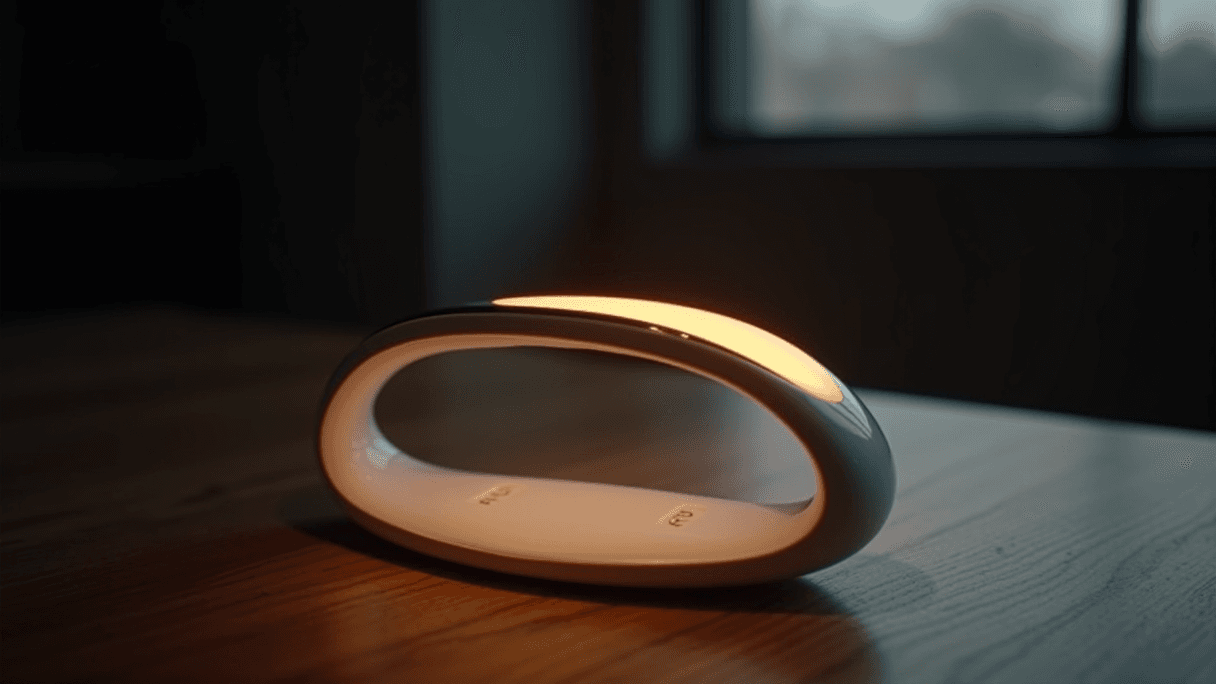
AI-generated image · US National Wire
Reports of a premium, ring-shaped smart speaker suggest OpenAI is attempting to bypass OEM dependencies, despite legal friction with Apple and a risky price point.
OpenAI is moving to transition ChatGPT from a software layer into a physical ecosystem. According to reporting from Bloomberg via TechCrunch, Engadget, and The Verge, the AI lab is developing a smart speaker designed to serve as the "physical manifestation" of ChatGPT.
By owning the device, OpenAI can control the entire user experience, though the move introduces significant capital risk and operational complexity.
**The Hardware Specifications** Reporting from Bloomberg, cited by The Verge and Engadget, describes the device as a battery-powered, "donut-shaped" or "ring-shaped" speaker roughly the size of a hockey puck. Designed for portability within the home, the device will reportedly feature: * **Premium Materials:** High-quality metal construction, according to TechCrunch. * **Interactive Elements:** Moving parts that operate autonomously to signal interaction, along with lights, a camera system, and environment-monitoring sensors, per Engadget and The Verge. * **Simplified Interface:** The device will lack a display screen, functioning similarly to ChatGPT’s voice mode but utilizing more advanced models for human-like interactivity, as reported by The Verge.
**Pricing and Market Positioning** OpenAI appears to be targeting the premium segment rather than competing on volume. TechCrunch and Engadget report a projected retail price between $300 and $400. This puts the device at a significant premium compared to Amazon’s smart speaker lineup, which TechCrunch notes ranges from $40 to $240.
Engadget highlights the scale of the investment driving this pivot, noting that OpenAI spent $6.5 billion on io, a startup led by Jony Ive. The partnership with Ive’s design studio, LoveFrom, underscores the company's intent to position the hardware as a luxury tech product. The Verge reports that this speaker may be the first in a broader "family of devices" planned by OpenAI.
**Strategic Friction and Risks** Opinion: This strategy is as much about legal and competitive insulation as it is about product expansion. By establishing its own hardware vertical, OpenAI reduces its reliance on the very companies currently challenging it in court.
However, the transition is fraught with friction. TechCrunch reports that Apple is currently suing OpenAI, alleging the theft of trade secrets. OpenAI has denied these allegations, and The Verge notes that the resulting hardware will reportedly look and feel nothing like an Apple product.
Beyond the legal battles, the commercial viability of the device remains unproven. TechCrunch observes that smart speakers have historically struggled with profitability, and Engadget suggests the high price point could turn the project into an "expensive side quest" if consumers resist the cost. The device is expected to launch in 2027.