
Monday Morning Huddle: The High Cost of Cheap Turf

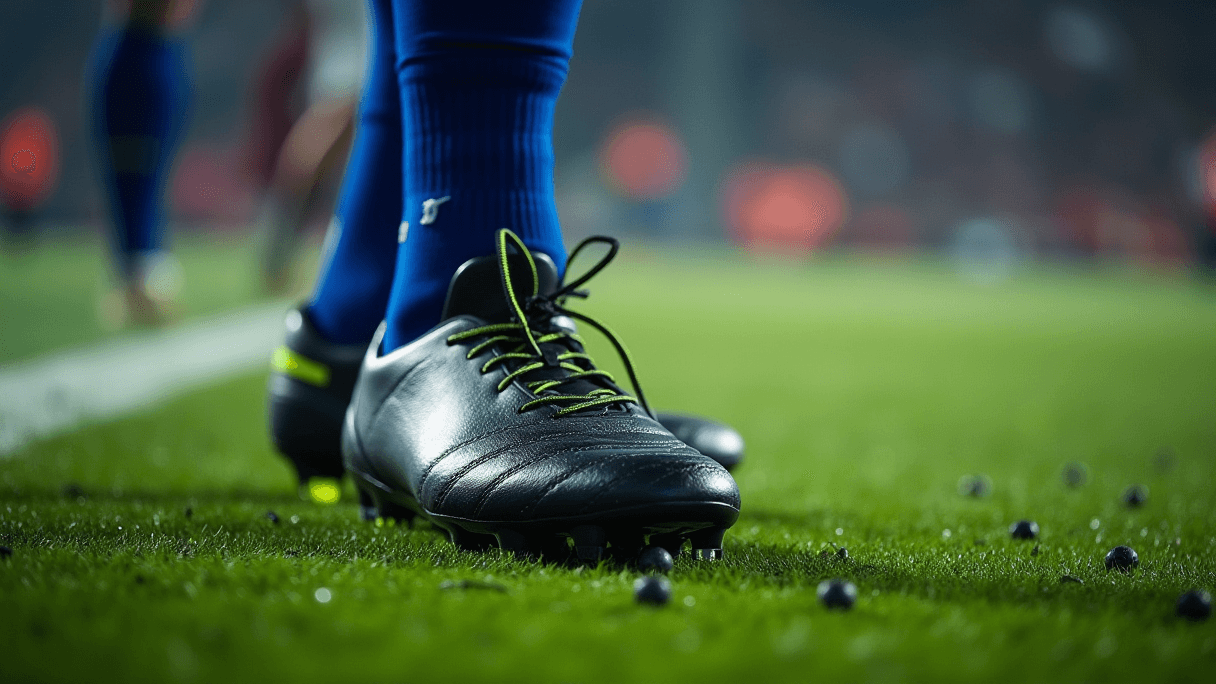
AI-generated image · US National Wire
The NFL's refusal to mandate natural grass is no longer a maintenance issue—it's a player safety crisis.
OPINION: For years, the NFL has operated under the guise that artificial turf is a necessary evil of modern stadium logistics. But after the 2026 FIFA World Cup proved that the world's most prestigious soccer tournament could successfully implement natural grass in U.S. venues, the league's excuse for clinging to AstroTurf has evaporated. It is time to stop treating player joints like disposable equipment for the sake of a few million dollars in maintenance.
The evidence is written in the injury reports. As reported by CBS Sports, data from 2012 to 2018 reveals a stark disparity: non-contact lower-extremity injuries were 28% higher on turf than on grass. The physics are simple—grass gives, while turf resists, placing immense force on the athletes. This results in 32% more non-contact knee injuries and a staggering 69% increase in foot and ankle injuries over that seven-year window.
Nowhere is this more evident than at MetLife Stadium. CBS Sports notes that the venue has been a graveyard for lower-body health, with players like Nick Bosa, Aaron Rodgers, Sterling Shepard, Malik Nabers, Kyle Fuller, and Wan'Dale Robinson all suffering serious injuries there over the last six years. Yet, for the World Cup, MetLife Stadium successfully transitioned to a natural surface, utilizing 20 truckloads of Tahoma 31 bermudagrass grown at the Carolina Green Turf Farm in North Carolina, supported by an irrigation system, vacuum ventilation, and two feet of sand.
The NFLPA, led by first-year executive director JC Tretter, has spent three years calling for the league to adopt natural surfaces. Tretter, who previously wrote about how his own joints felt stiffer after practicing on artificial fields, is now leading a movement under the hashtag #WorthTheCost. The sentiment is echoed by the league's biggest stars. San Francisco 49ers tight end George Kittle has been vocal, arguing that the World Cup's success at venues like SoFi Stadium and MetLife Stadium proves the NFL could play on grass year-round if owners actually cared. Kittle estimated that 90% of players would prefer grass if given the choice.
Other stars have joined the chorus, including Bears QB Caleb Williams, Colts RB Jonathan Taylor, Commanders OT Laremy Tunsil, and Panthers LB Devin Lloyd. Even Packers TE Tucker Kraft pointed to Green Bay's natural surface as the gold standard for the league.
Critics will point to the difficulty of maintaining grass over an 18-week NFL season compared to a short soccer tournament. They will cite the resources required for irrigation and the wear-and-tear of football. But the World Cup showed it is possible. AT&T Stadium hosted nine matches on grass, SoFi Stadium hosted eight, and a combined 15 matches were played on natural grass at NRG Stadium in Houston and Mercedes-Benz Stadium in Atlanta.
As Kittle puts it, the NFL is not short on resources. Asking owners to spend a few extra million dollars to protect the health of their primary assets is not a radical request; it is a basic requirement of player safety. If the stadiums can make it work for FIFA, they can make it work for the NFL.