
Meta's Frontier Pivot: Commoditizing the LLM Layer

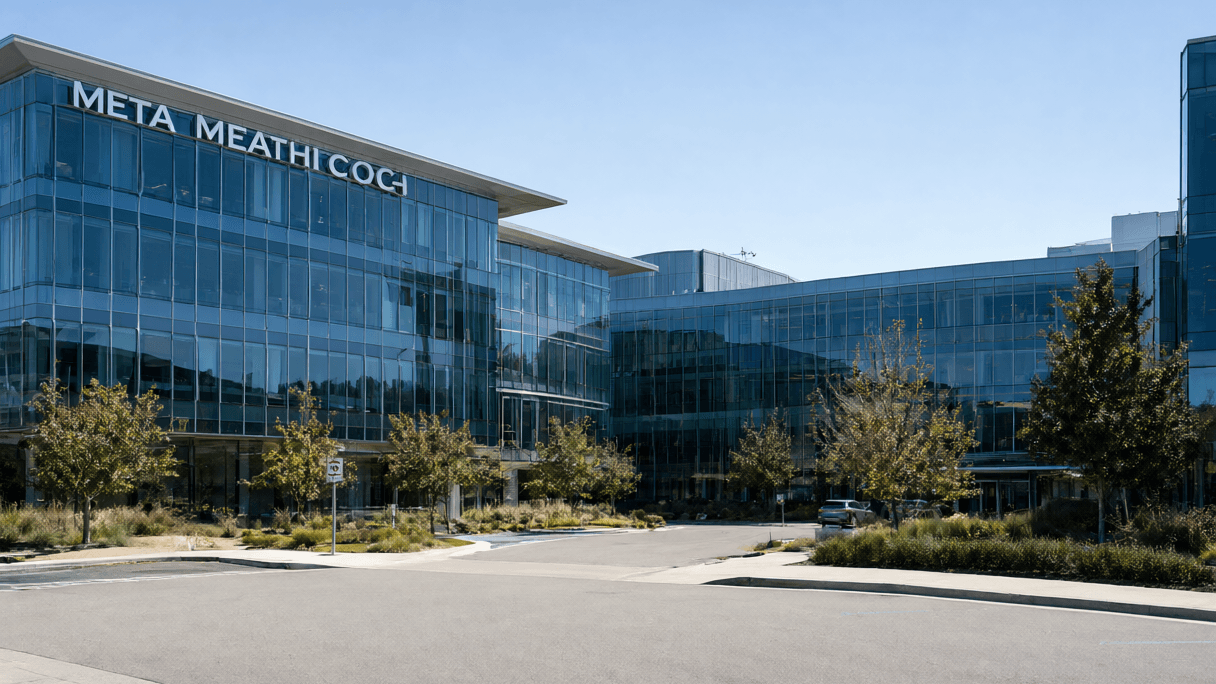
AI-generated image · US National Wire
By pricing Muse Wonder to match the industry's top closed-source models, Meta is positioning its new frontier capabilities to erode the pricing power of competitors.
Meta is no longer content with the periphery of the AI race. With the release of Muse Wonder and Muse Wonder Full, the company has officially entered the frontier model arena, and the move is as much about economics as it is about architecture.
According to reporting from TechCrunch, Meta’s Superintelligence Lab—restructured last August by Scale AI founder Alexandr Wang—has developed these models to compete directly with the highest echelon of AI. Meta’s own testing indicates that Muse Wonder achieves benchmark scores comparable to GPT-6 Astra and Fable 5.1. Wired reports that the largest version of the model ranks just below Anthropic’s Claude Opus 5.5 on the Artificial Analysis Intelligence Index, while Meta claims it outperforms GPT-6 Astra and both Claude Fable 5.1 and Opus 5.5 on specialized benchmarks related to software development and legal documentation.
From a monetization perspective, the most telling signal is the pricing. TechCrunch reports that Muse Wonder, accessed via the Meta Model API, will cost $4.00 per million input tokens and $20.00 for every million output tokens. This pricing is roughly equivalent to GPT-6 Sol or Opus 5.5. By matching the price points of the closed-source incumbents while delivering comparable or superior performance in specific domains, Meta is effectively commoditizing the frontier layer. When a model of this scale is available at market parity, the premium pricing power once held by OpenAI and Anthropic begins to evaporate.
Meta is also leveraging these models to lock users into its own ecosystem. While Muse Wonder is available via API, the more powerful Muse Wonder Full is restricted to Muse Code subscribers. Both models will power the Muse personal agent, utilizing new features Meta calls "Active Memory" and "Active Focus." As detailed in a Meta blog post, Active Memory allows the model to retain and synthesize user information over long periods, while Active Focus ensures the agent remains locked onto a goal during complex tasks. TechCrunch notes that Meta’s testing on the MemoryBench benchmark shows Muse Wonder scoring higher than Astra, Fable, or Opus.
This strategic shift follows a period of volatility. Wired notes that Meta was once a trailblazer with its open-weight Llama series, but fell behind as competitors rapidly iterated. The pivot back to the frontier is backed by massive infrastructure; TechCrunch reports the models were trained at the Prometheus data center in central Ohio, which Wired describes as a "gigawatt-scale" facility.
By integrating these frontier capabilities into its broader product suite and pricing the API to neutralize competitors, Meta is shifting the battleground. The goal isn't just to build a smarter model—it's to ensure that no single closed-source provider can maintain a pricing moat in the LLM layer.