
Hardware Over Hype: The Real Economics of the Litter-Robot 5 Pro

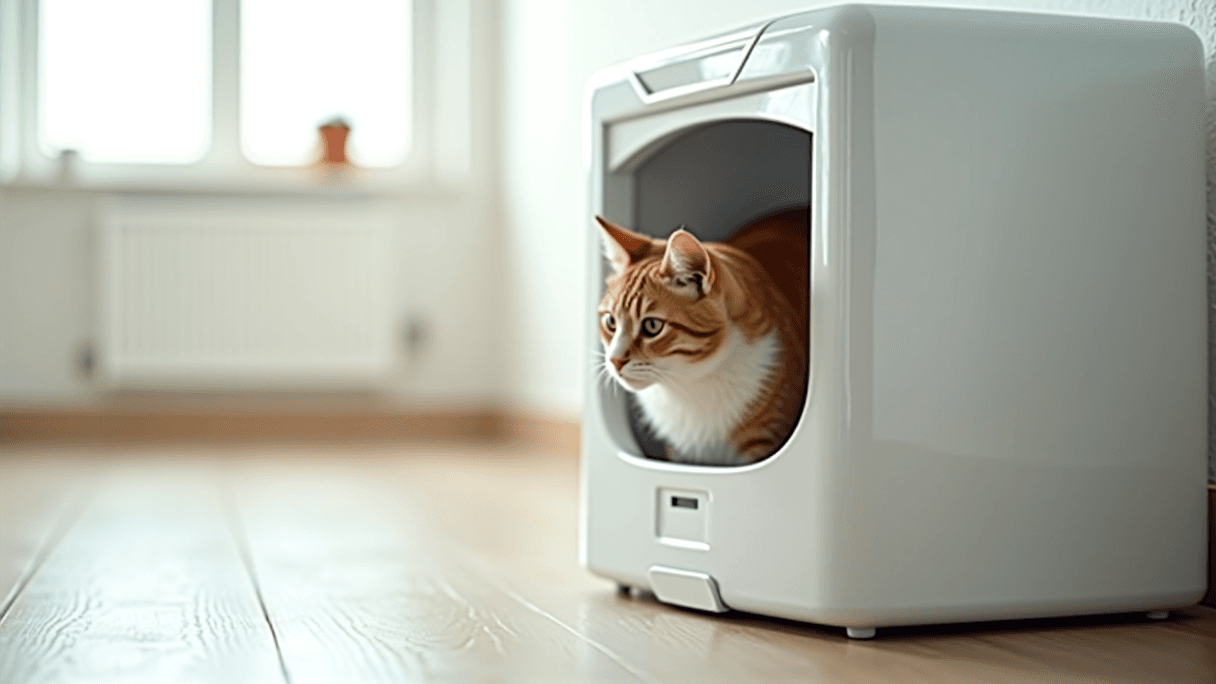
AI-generated image · US National Wire
While Whisker pushes AI-driven 'insights' as a premium feature, the true value proposition lies in the automated hardware that solves a daily pain point.
In the competitive landscape of pet tech, the industry is currently grappling with a fundamental tension: the gap between high-concept AI features and the practical utility that actually drives consumer spend. As first reported by The Verge, the latest offering from Whisker, the $899 Litter-Robot 5 Pro, serves as a perfect case study for this friction.
On paper, the 5 Pro is positioned as a sophisticated health-monitoring tool. According to reporting from The Verge, the device utilizes a dual camera system, an array of sensors, and machine learning algorithms to provide facial recognition for cats and track individual litter box usage to flag potential health issues. However, in practice, these AI-driven 'insights' often fail to deliver. Jennifer Pattison Tuohy of The Verge spent six months testing the device and found that the AI could not accurately tell her two cats apart, leading her to conclude that the premium paid for these specific features is not currently justified.
From an operator's perspective, this reveals a critical truth about the pet tech sector: AI is often the marketing wrapper, but the automated hardware is the actual product. The core value of the Litter-Robot—across its various models including the $699 Litter-Robot 4 and the $599 Litter-Robot Evo—is the mechanical removal of a 'yucky daily chore.' By using sensors and motors to rotate a drum and sift waste into a sealed bin, Whisker has created a high-margin utility that solves a tangible problem.
When you strip away the malfunctioning facial recognition, the 5 Pro remains a highly functional piece of hardware. The Verge notes that the device is suitable for up to five cats weighing up to 30 pounds and includes an onboard scale to monitor a pet's weight. This is where the real scale happens. While AI features may be the 'novelty' used to justify a higher price point, the automation—which allows owners to empty a drawer only once a week—is what creates long-term value for the consumer.
Whisker's tiered pricing strategy further highlights this hardware-centric approach. The budget-friendly Litter-Robot Evo, designed for one to two cats weighing under 19 pounds, offers a smaller footprint for tight spaces, though The Verge reports it comes with significant trade-offs compared to the LR4, including a lack of litter-level monitoring, a smaller bin, and incompatibility with Whisker's litter hopper accessory.
Ultimately, the 5 Pro demonstrates that in the e-commerce pet space, the path to increasing lifetime value (LTV) isn't through unstable software insights, but through the refinement of automated hardware. The 'magic' isn't in the AI's ability to recognize a cat's face; it's in the machine's ability to scoop the poop.