
FLIP Framework Enhances Exoplanet Detection Sensitivity

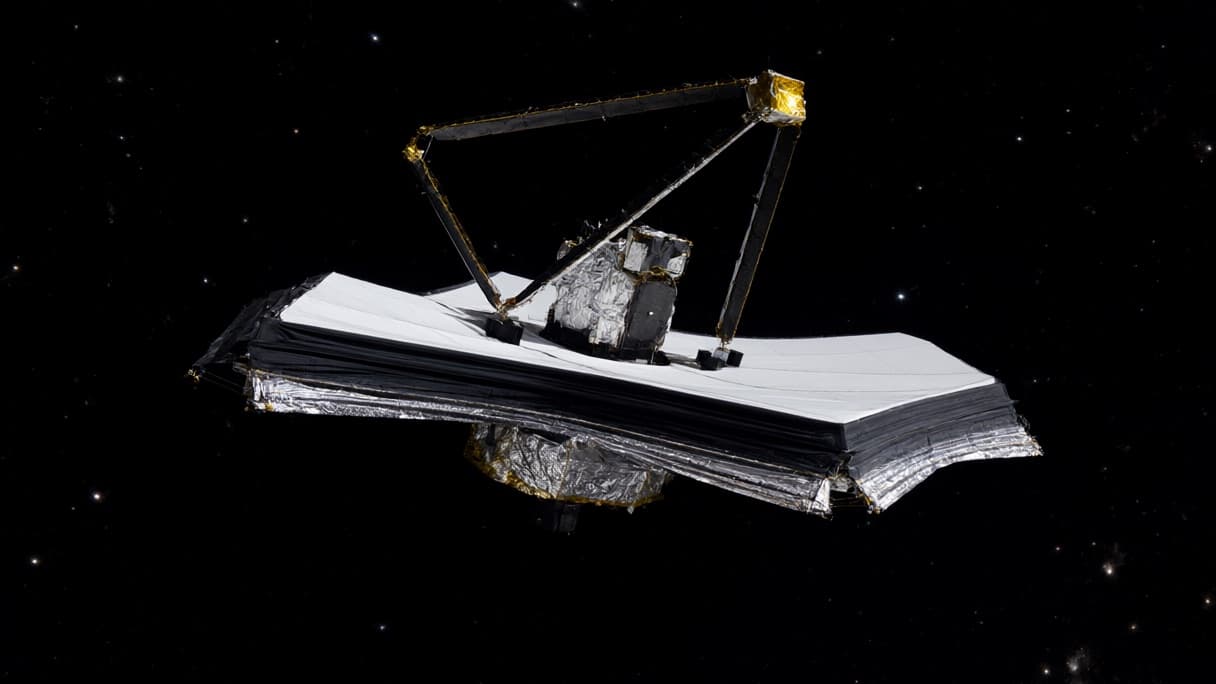
AI-generated image · US National Wire
A new machine-learning approach removes starlight interference from James Webb Space Telescope data, revealing previously hidden planets.
Researchers have developed a new method to isolate the faint light of exoplanets from the overwhelming glare of their host stars. According to reporting from The Register, the Physics-based Learning for Imaging Planets (FLIP) framework combines a physics-based telescope model with machine-learning optimization techniques to subtract unwanted starlight from images.
A team led by Rodrigo Ferrer-Chavez of Northwestern University utilized FLIP to process data from the James Webb Space Telescope's Near-Infrared Camera (NIRCam). The results, detailed in a Nature paper, showed that FLIP could improve detection sensitivity by two to 15 times compared to conventional processing methods. Using this framework, the team produced the first image of the giant planet 51 Eridani b at an infrared wavelength of 4.3 micrometers, a feat that previous processing techniques had failed to achieve.
While existing methods subtract reference or modeled starlight, residual glare caused by minor optical imperfections often obscures planets. FLIP addresses this by modeling light passage through the telescope and simulating the specific glare to be removed. The researchers state that the framework could be applied to other space-based and ground-based observatories, potentially lowering the stability requirements for such instruments. Future goals for the team include managing larger data volumes from ground-based observations and reducing computational requirements to move closer to capturing direct images of Earth-like planets.