
FIFA's Climate Blind Spot is a Logistical Liability

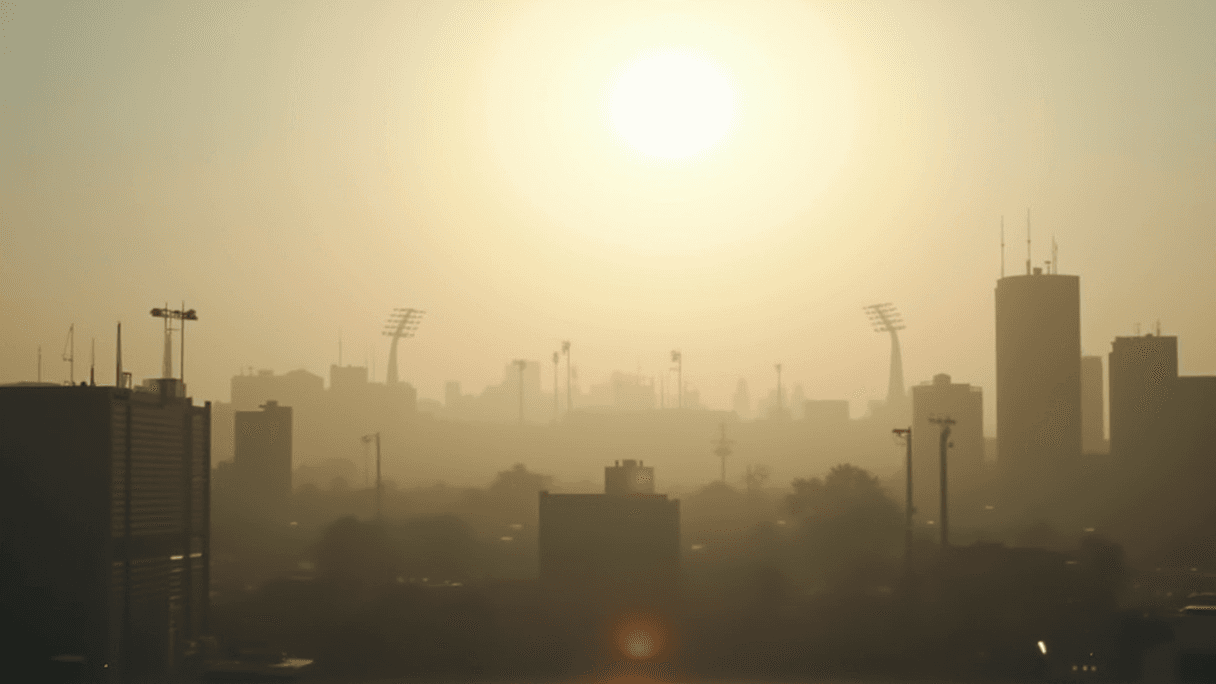
AI-generated image · US National Wire
Opinion: The governing body's lack of air quality protocols for the World Cup isn't just a PR lapse—it's a failure to prepare for the physical reality of modern sports.
As the 2026 World Cup reaches its climax with Argentina and Spain set to face off just outside of New York City, the conversation shouldn't just be about the score. It should be about the air.
Reporting from Wired reveals a glaring hole in FIFA's operational planning: the organization appears to have no contingency plan for wildfire smoke. This isn't a theoretical concern. Canadian wildfires have already blanketed the East Coast and Midwest, pushing air quality in New York to "unhealthy" and "very unhealthy" levels. While forecasts suggest conditions may improve to "moderate" by the time the final kicks off, the fact that the world's most powerful soccer governing body is relying on luck is a systemic failure.
In my view, this isn't merely a failure of corporate social responsibility or a PR oversight. It is a failure to acknowledge that climate change has transformed the physical viability of global sporting events into a logistical liability.
FIFA has attempted to project a sense of control. In a statement cited by Wired, the organization claimed that "climate-related risks" are assessed during tournament planning and managed with national agencies and host cities. They have also detailed protocols for extreme heat, such as mandatory water breaks. But as the smoke turns the New York sky orange, it becomes clear that "overall tournament planning" is not the same as a concrete, actionable roadmap for air quality.
When you compare FIFA to other leagues, the negligence is stark. Wired notes that the National Women's Soccer League (NWSL) has a standardized policy that triggers additional hydration breaks at an air quality index (AQI) of 101 and mandates the cancellation or postponement of games when the AQI exceeds 200. Major League Baseball and Major League Soccer have already rescheduled or canceled games this week due to smoke.
FIFA, meanwhile, is presiding over an open-air stadium where stars like Lionel Messi and Lamine Yamal are slated to play. There is no way to close the stadium. If the smoke persists, players and fans—including vulnerable groups like children and those with asthma—will be exposed to hazardous air. Courtney Howard, a Global Climate and Health Alliance official and emergency room physician, told the Associated Press that high-level athletes moving large volumes of air through their lungs should not be practicing outdoors during hazardous air quality events. Yet, the Spanish team did exactly that in New Jersey this past Thursday.
Nicholas Watanabe, a professor of sport and entertainment management at the University of South Carolina, told Wired that FIFA "seems unprepared for these wildfires." He suggests that while FIFA may "dodge a bullet" if the smoke dissipates before the final, this should serve as a critical wake-up call.
We are seeing a growing frustration among the athletes themselves. Trinity Rodman, who played in a smoke-affected NWSL game, questioned the logic of playing if hydration breaks are required every 15 minutes. Even outside of soccer, the pressure is mounting; Tour de France yellow jersey holder Tadej Pogačar recently suggested the entire cycling calendar should be changed to avoid the summer's extreme heat and smoke.
FIFA cannot continue to operate as if these events are anomalies. By failing to implement standardized air quality triggers, they aren't just risking a few matches—they are ignoring the fact that the environment is now a primary opponent. If the governing body of the world's most popular sport cannot plan for the air its players breathe, it is failing its most basic logistical duty.