
Fair Hill Five Coup Highlights Transatlantic Liquidity Gaps

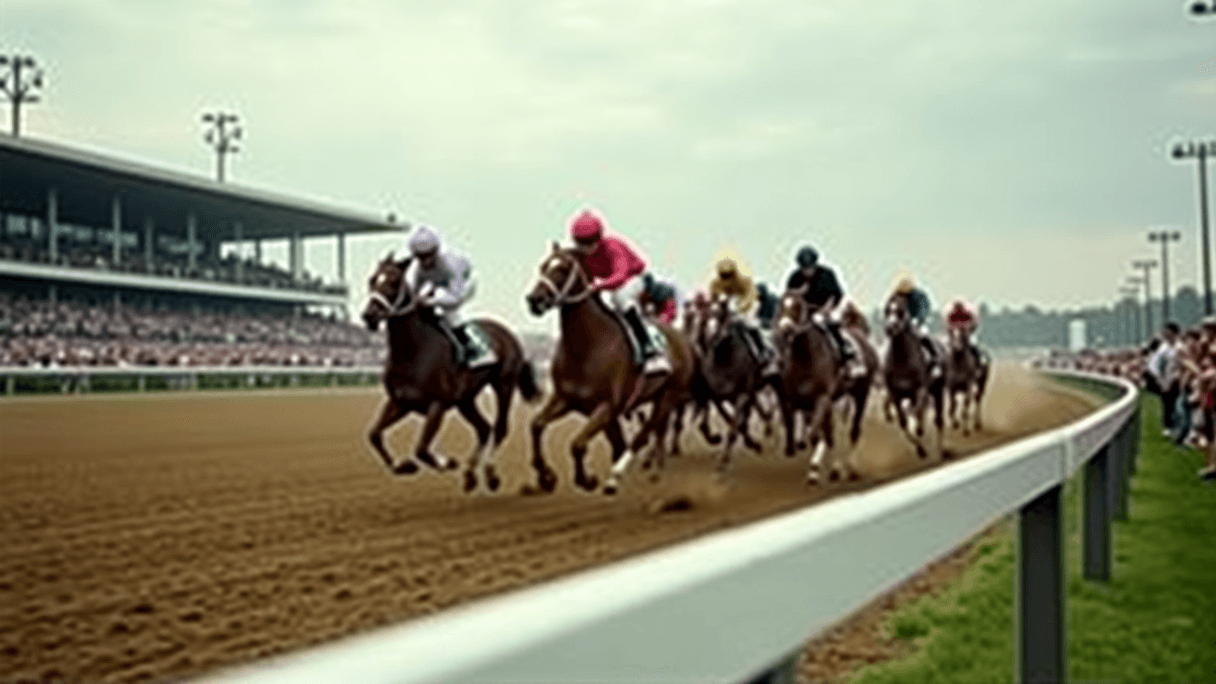
AI-generated image · US National Wire
A coordinated betting operation targeting U.S. longshots through U.K. bookmakers exposes the disconnect between parimutuel pools and fixed-odds markets.
The recent "Fair Hill Five" incident serves as a stark case study in how coordinated betting syndicates can exploit the structural differences between American and British wagering systems to bypass traditional market flags, as first reported by The Guardian.
According to reporting from The Guardian, the event centered on a series of improbable victories on August 9, 2026. Four horses with minimal records of success—The Great Amira, Tepeyac, Classic Rock, and M BS Melanie Cares—won races at Monmouth Park in New Jersey and Saratoga in New York. A fifth horse, Scootaloo, finished fourth at Saratoga, while a sixth, Winston Wolf, placed second at Colonial Downs in Virginia. All six horses had recently worked out at the Fair Hill Training Center in Maryland and were returning from layoffs lasting between four and nine months.
From an industry perspective, the anomaly is rooted in the horses' lack of form. The Guardian notes that in their previous 17 starts, the six animals had failed to finish in the top three in 16 of those outings. Specifically, The Great Amira had finished last in her two prior races, including one loss by 40 lengths, before winning at 17-1 odds. Furthermore, the listed connections—trainer Angel Quiroz and owner-trainer Ernesto Ochoa—had combined for only four wins in all of 2026 prior to that Sunday.
While the on-track results were shocking, the betting patterns revealed a sophisticated effort to avoid triggering U.S. market alarms. The Guardian notes that the Racing Post reported a "six-figure betting coup" executed via in-person wagers at least 12 different London bookmakers. Because these bets were placed in the U.K. using a fixed-odds model, they did not impact the U.S. parimutuel odds, which are determined by a common betting pool. One estimate cited by The Guardian puts the potential exposure for British bookmakers as high as £800,000 (approximately $1.1 million).
However, the coordination did leave a footprint in the U.S. pools. The Guardian cites an analysis by Horse Racing Nation of 1,065 similar doubles since 1998, which identified the $2 Daily Double pairing The Great Amira and Tepeyac as the worst-performing of its kind in nearly three decades. The payout was only $25.60, whereas it would have been $178.56 had the first win payout simply rolled over. Though the total pool was small—under $10,000—the skewed payout indicated the specific combination had been targeted.
**Wes Calder's Take: Opinion** This incident exposes a critical vulnerability in transatlantic racing liquidity. By splitting wagers across overseas fixed-odds shops, syndicates can effectively "blind" the domestic parimutuel system, preventing the odds from shortening in a way that would alert regulators or the general public. The fact that such a coordinated effort could occur across 12 different shops without triggering a collective red flag suggests a failure in current monitoring systems to track cross-border betting patterns.
The U.S. Horseracing Integrity and Safety Authority (Hisa) is currently investigating whether the event was the result of exceptionally sharp betting or more nefarious activity.