
EPA's Retreat on Factory Farm Emissions Prioritizes Industrial Convenience Over Air Quality

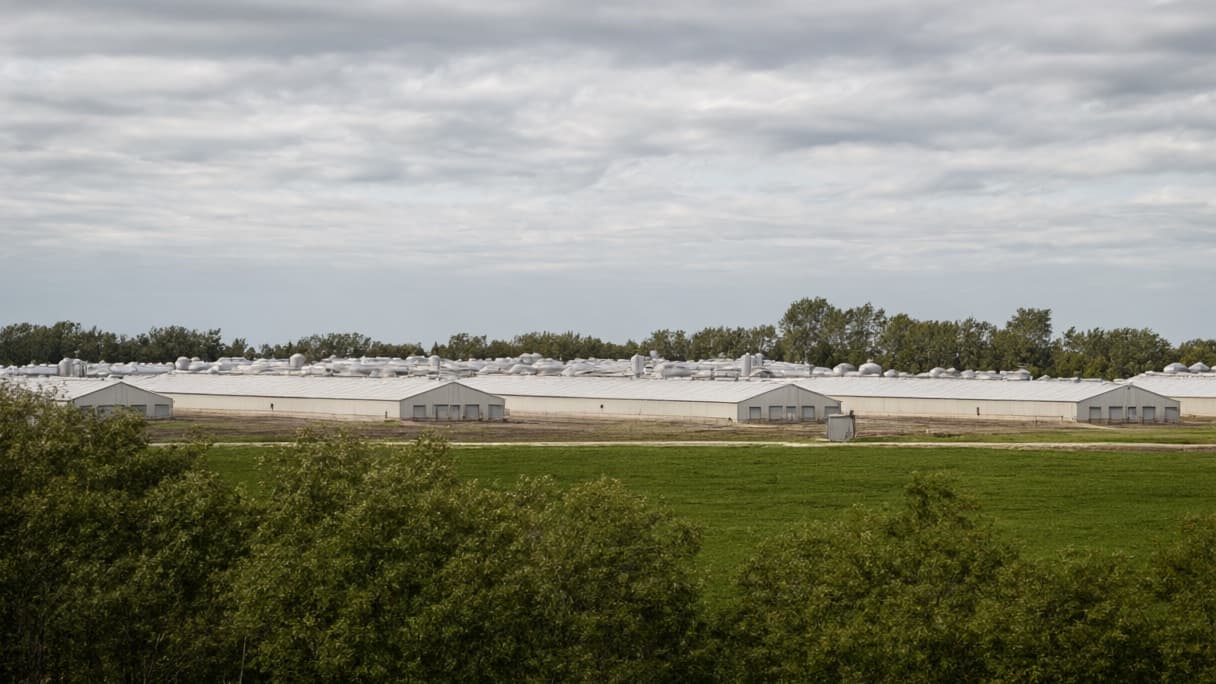
AI-generated image · US National Wire
After two decades of stalled monitoring and industry-funded studies, the EPA has effectively abandoned Clean Air Act enforcement for concentrated animal feeding operations.
### Opinion: Deployment Over Convenience
As a tech columnist focused on clean tech, I track deployment—not just policy promises. As Ars Technica first reported, the EPA's recent decision to end its effort to monitor air pollution from factory farms is a stark example of prioritizing industrial convenience over the actual deployment of air quality standards. When a regulatory agency spends twenty years failing to produce a measurement methodology and then uses that failure as a justification to stop trying, it is a policy surrender.
According to Ars Technica, the EPA announced on October 30 that it is terminating a more than 20-year effort to develop methods for monitoring air pollution at factory farms, effectively shuttering attempts to regulate these facilities under the Clean Air Act. Under a 2005 "Air Consent Agreement," thousands of concentrated animal feeding operations (CAFOs) were granted safe harbor from legal action in exchange for participating in an industry-funded National Air Emissions Monitoring Study.
Despite this, the EPA failed to produce emissions estimating methodologies, a failure noted in a 2017 Office of Inspector General report. In justifying the October 30 decision, Abigale Tardif, acting assistant administrator for the EPA’s Office of Air and Radiation, stated that the study data is now too old to support reliable methods. Rob Brenneman, president of the National Pork Producers Council, supported the move, stating it confirms there is no "one-size-fits-all model" for farms.
The cost of this inaction is high. Livestock facilities emit a toxic mix of pollutants that research indicates contribute to nearly 12,700 U.S. deaths annually. While the agreement did not cover methane—the livestock industry is the nation's largest source—the retreat on other pollutants signals a broader lack of oversight.
Tarah Heinzen, legal director for Food & Water Watch, argues this signals an intention to avoid holding factory farms accountable. Heinzen notes that while the EPA failed to produce national factors, viable models exist—citing California as a state that uses its own models to enforce regulations. The lack of an EPA methodology, Heinzen argues, does not absolve farms of their obligation to comply with federal law.