
Dismantling the Framework: The Practical Fallout of EPA’s Power Plant Rollbacks

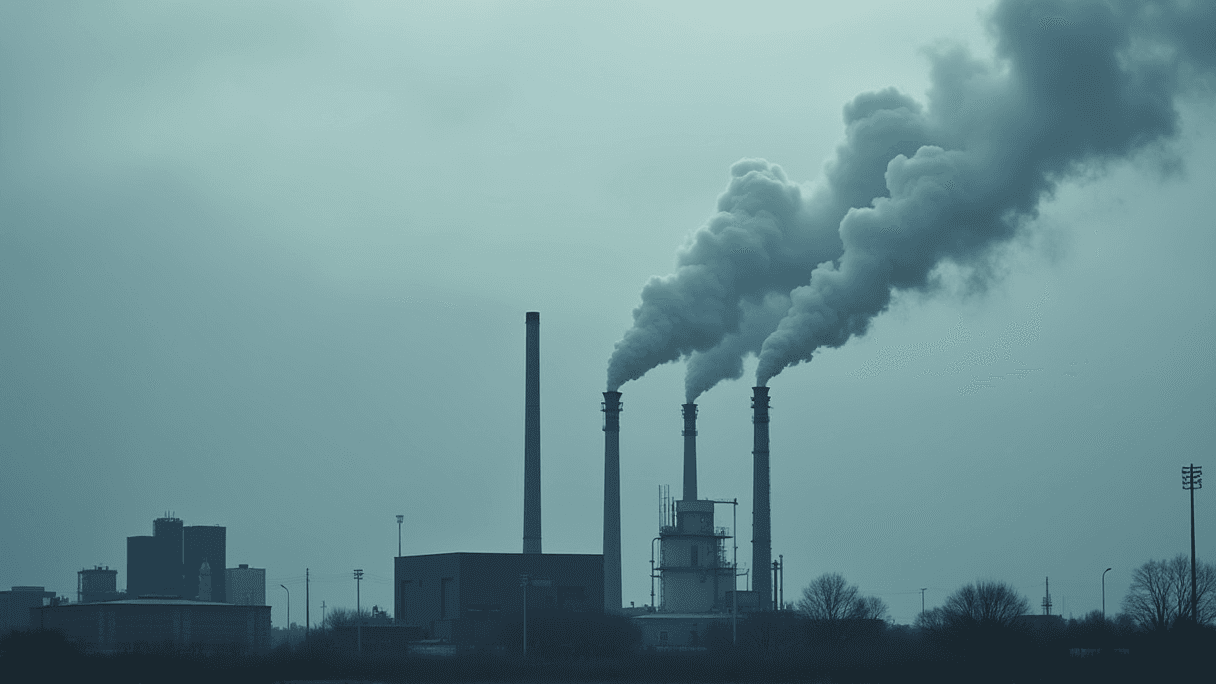
AI-generated image · US National Wire
By gutting the Carbon Pollution Standards and challenging the 'endangerment finding,' the Trump administration isn't just changing rules—it's attempting to erase the legal basis for climate regulation.
When analyzing the Trump administration's latest moves at the Environmental Protection Agency (EPA), the noise of political rhetoric often obscures the mechanical reality of how the energy grid is governed. The core issue isn't just the removal of a single rule, but a systemic attempt to dismantle the legal architecture that has guided power plant investments and emissions contracts for nearly two decades.
According to reporting from Ars Technica, the EPA has announced a final plan to gut the 2024 Carbon Pollution Standards. The agency's justification is twofold: it claims the rules exceed its authority under the Clean Air Act by requiring technologies that are not "adequately demonstrated," and it has proposed revoking all remaining greenhouse gas (GHG) emissions requirements for power plants. Most strikingly, the agency now argues that power plant emissions "have no material impact on climate change."
To understand why this matters for grid stability and contract viability, one must look at the "endangerment finding" established in 2009. As Ars Technica notes, the Supreme Court ruled in 2007 that the Clean Air Act includes greenhouse gases as air pollutants; if the EPA concludes these gases pose a danger to human health and the environment, it is mandated to act.
Zealan Hoover, a former senior advisor to the EPA during the Biden administration, describes this as a three-part strategy. First, the administration is repealing the endangerment finding. Second, it is rolling back regulations that relied on that finding. Third, it is attempting to prevent future administrations from re-regulating climate pollution. Hoover characterizes this approach as "burning [the rules] to the ground" to ensure that future regulatory efforts are incredibly difficult to implement.
From a deployment perspective, this creates a volatile environment for energy providers. The Biden-era EPA previously asserted in June 2024 that the benefits of the Carbon Pollution Standards "substantially outweigh the compliance costs," citing a regulatory impact analysis that projected a reduction of 1.38 billion metric tons of carbon pollution through 2047.
However, the current administration is shifting the cost-benefit calculus. Hoover notes that the Trump administration is "heavily discounting, if not completely refusing" to quantify public health benefits. This shift doesn't just change the math; it changes the risk profile for any utility company that has already invested in the "control technologies" the EPA now claims are not adequately demonstrated.
While Maggie Coulter, a senior attorney at the Center for Biological Diversity’s Climate Law Institute, argues that these moves contradict established science and may not stand up in court, the immediate effect is a vacuum of regulatory certainty. When the government chooses to deny the reality of climate impact—as President Donald Trump did last year at the United Nations by calling climate change the "greatest con job ever perpetrated on the world"—the resulting instability makes long-term clean energy contracting a gamble rather than a strategic investment.