
Bypassing the Bottleneck: The Strategic Logic of Floating Data Centers

AI-generated image · US National Wire
As land scarcity and grid constraints throttle enterprise scaling, a Japanese consortium and global competitors are betting on barge-based compute to unlock capacity.
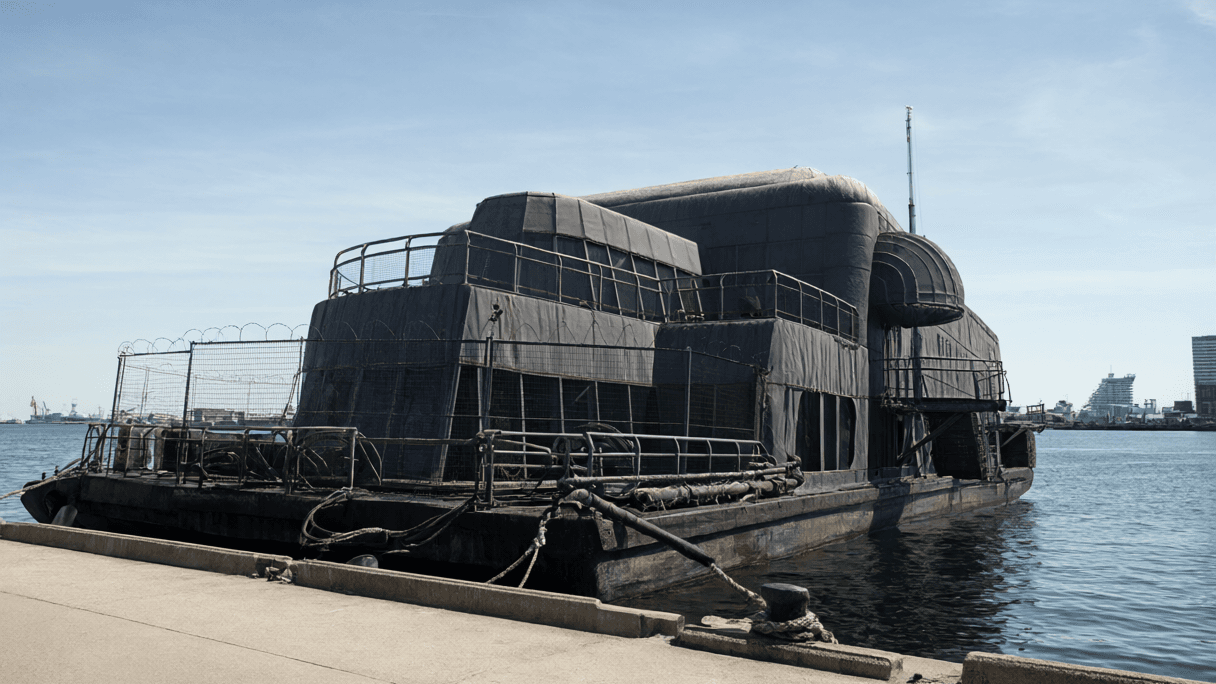
For enterprise leaders, the current scaling crisis isn't just about chip availability—it is a real estate and power problem. The struggle to secure suitable sites for data center expansion has created a critical bottleneck for compute demand. As The Register first reported, a Japanese consortium is attempting to solve this space crunch by deploying server farms on barges moored at port quays.
This consortium consists of four entities: shipping and logistics firm NYK Line, engineering company NTT Facilities, renewable energy developer Eurus Energy, and MUFG Bank. From an operational standpoint, the strategy is designed to avoid competing for scarce development land. By keeping these facilities alongside quays, the group can leverage existing port infrastructure and nearby power generation while they refine the technology for deeper sea deployments.
**The ROI of Offshore Compute**
The long-term strategic play extends beyond mere land avoidance. The Register reports that the consortium is exploring facilities further out at sea to tap into renewable energy sources, specifically offshore wind. Other players, such as Oregon-based Panthalassa, are investigating the use of wave power to fuel these floating hubs.
However, moving compute further from the coast introduces significant operational risks. The consortium acknowledges that offshore deployments face practical hurdles, including the need for independent power supplies, high-capacity telecoms links, and reliable maintenance access.
**Market Momentum and Execution**
The shift toward floating infrastructure is already moving into the testing phase. A memorandum of understanding was signed with the city of Yokohama for a renewable-powered demonstration, and tests began in March 2026. Within the partnership, NYK Line is managing development, NTT Facilities is evaluating design and operation, Eurus Energy is researching renewable power, and MUFG Bank is reviewing financing options.
Competition is entering the space rapidly. Samsung Heavy Industries has announced its own intentions to enter the floating facility market, with a target operational date set for the second calendar quarter of 2028.
*Opinion: While the technical hurdles of maritime connectivity are non-trivial, the move toward floating data centers represents a necessary pivot. When the traditional real estate model fails to keep pace with compute demand, the only viable path to scaling is to decouple the data center from the land.*