
Beyond the Static Set: The Rise of Latent Semantic Memory

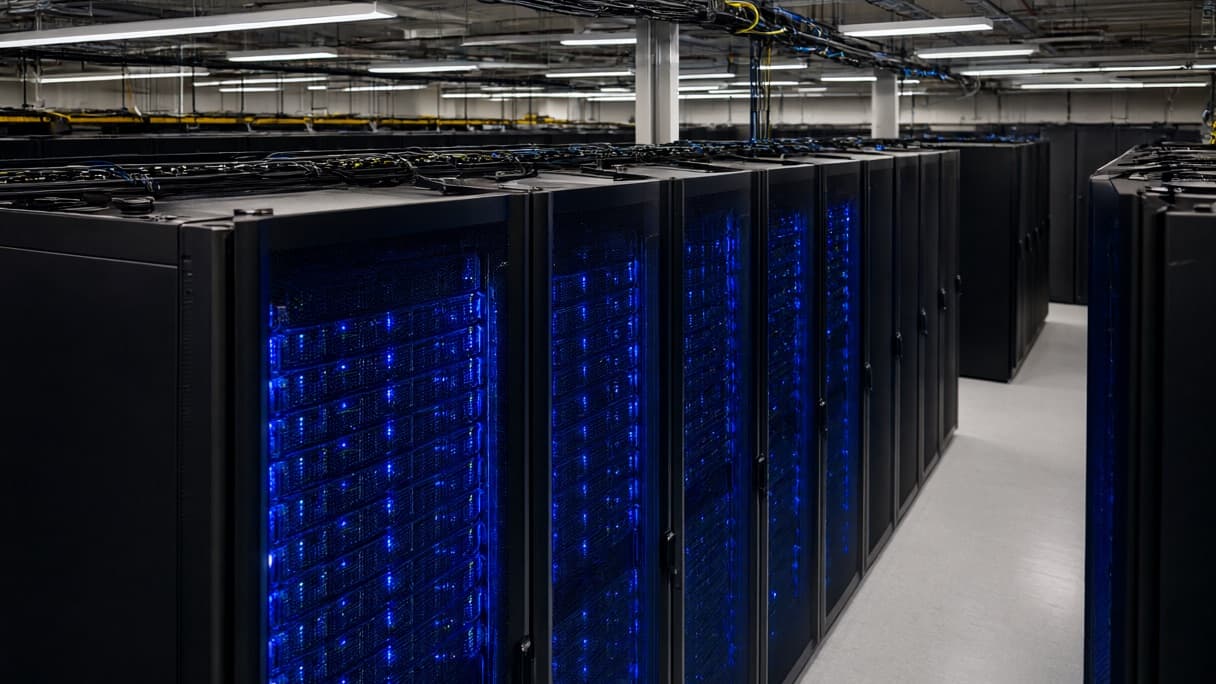
AI-generated image · US National Wire
New research into 'memory tokens' suggests a future where AI agents maintain a coherent, evolving identity without the bloat of full-context windows.
For years, the industry has operated under a specific constraint: the frozen nature of Large Language Models (LLMs). To give these models a sense of history or specific knowledge, we have relied on stuffing the context window with as much data as possible—a process that is computationally expensive and often inefficient. But as we look toward the horizon, we are moving away from these static training sets toward a more fluid, persistent form of synthetic memory.
According to a paper published via arXiv, as first reported by the platform, researchers including Adibvafa Fallahpour, Parsa Idehpour, Vignesh Kothapalli, Nikita Mounier, Shirley Wu, Shayan Pardis, and Jure Leskovec have introduced a system called Memorilla. This latent semantic memory system represents a fundamental shift in how AI maintains coherence over time. Rather than relying on the raw volume of a context window, Memorilla encodes documents—ranging from book chapters to user chat histories—into reusable embeddings. It then retrieves and places query-specific information directly into the LLM's input embedding space using a fixed number of 'memory tokens.'
*Opinion: This is the mechanism that unlocks true agentic identity. By condensing vast histories into a few high-density tokens, we move from AI that 'remembers' because it is reading a transcript to AI that 'knows' because it has a compressed, semantic history.*
The efficiency gains reported in the arXiv paper are stark. Memorilla utilizes only 16 memory tokens to achieve superior performance over baselines such as MemoRAG and Mem0 across five of eight benchmarks. Most notably, on the FactKG benchmark, the system reached 84.33% accuracy, surpassing the 80.43% accuracy achieved through full-context inference. The most disruptive detail is the efficiency: Memorilla achieved this while using 108x fewer tokens to represent the source documents.
This shift has profound implications for agentic systems that must operate over long trajectories. In a TextWorld environment, the researchers found that Memorilla significantly improved an agent's ability to navigate, reducing its tendency to wander back into rooms it had already explored. This resulted in an average success rate increase from 18.6% (using full-history in-context learning) to 24.2%.
We are witnessing the beginning of the end for the 'context window war.' The goal is no longer simply to make the window larger, but to make the memory smarter. By facilitating continual learning where the count of documents—or an agent's past turns—can increase indefinitely without crashing the system, Memorilla provides a blueprint for AI that evolves in real-time. The future of AI is not a larger library; it is a more efficient way of remembering.