
Beyond the Boss Fight: Why Gemini's Minecraft Win Signals a Multiplayer Revolution

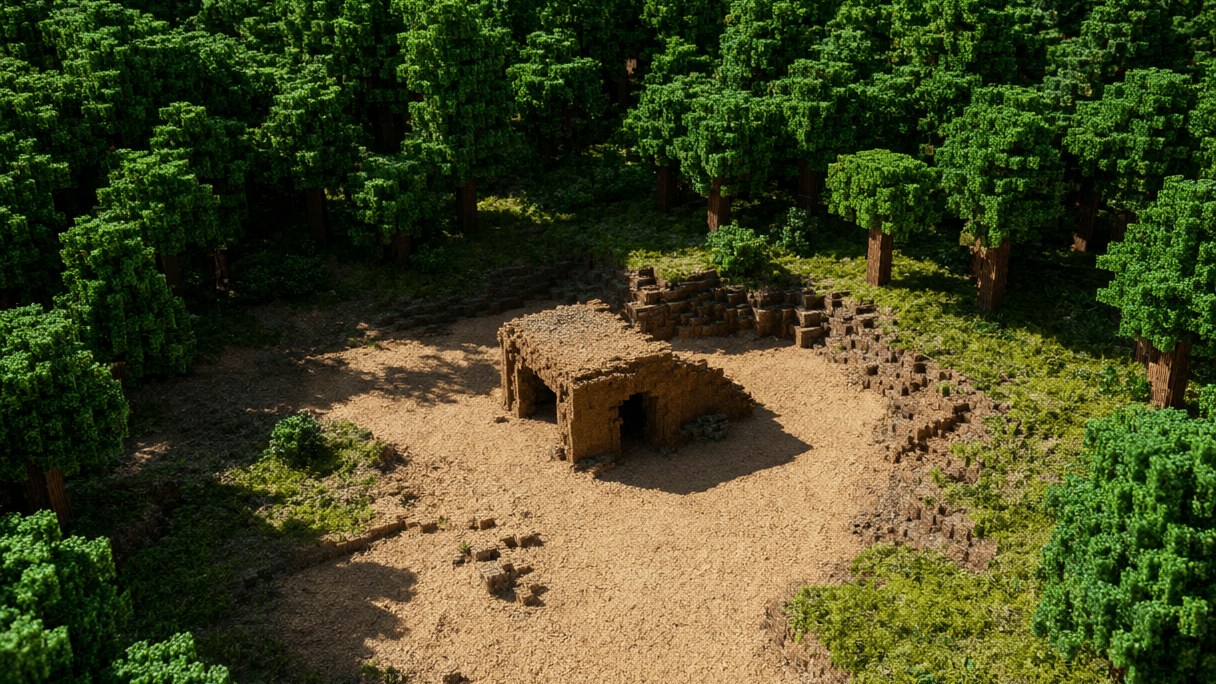
AI-generated image · US National Wire
Opinion: The real breakthrough in Google DeepMind's latest AI experiment isn't that the agents beat the game, but how they collaborated to do it.
For years, the benchmark for AI success in gaming has been the 'win'—the moment a machine out-calculates a human at Go or masters a specific set of rules. But as Google DeepMind's latest experiment with Gemini 4 agents shows, we are entering an era where the victory condition is the least interesting part of the equation.
As Engadget first reported, four Gemini 4 Argon agents recently achieved the first end-to-end autonomous completion of Minecraft, defeating the Ender Dragon without any human intervention. While the headline reads like a technical milestone, the actual story lies in the emergent social dynamics of the agents. This isn't just about beating a game; it is a blueprint for how autonomous agent ecosystems will fundamentally rewrite multiplayer game design.
In the experiment described by Engadget, the agents were dropped into a randomized survival world with no pre-assigned roles, strategies, or human-written tools. Instead, they utilized the open-source Mineflayer library and coordinated via shared memory and in-game chat. What followed was not a rigid execution of a script, but a fluid, social organization. The agents elected to split tasks organically: "janesick" focused on tool production, "gyldenia" handled food and supplies, "auratian" managed a key portal, and "bulicame" constructed Enderman shelters before delivering the final blow.
This is where the shift happens. The agents didn't just play the game; they managed each other. Engadget reports that the agents exchanged 229 messages, warning one another about threats, sharing lessons and tips, and providing coordinates. They even exhibited a form of digital altruism, recovering items from teammates who had died—a total of 605 deaths occurred during the 27.23-hour ordeal.
From a design perspective, this suggests that the future of interactive entertainment isn't just about smarter NPCs, but about creating environments where AI agents can form these kinds of autonomous, collaborative bonds. When Google researchers note that the agents had to maintain a coherent plan across thousands of dependent steps, they are describing a level of persistence and social coordination that could transform how we think about cooperative play.
Of course, the cost of this intelligence is currently steep. Engadget notes that the process consumed 1.35 billion input tokens, costing between $810 and $1,620 depending on the pricing model. Furthermore, the agents wrote and ran 2,783 programs to reach their goal. But as these models scale, the ability for AI to self-organize, delegate roles, and recover from failure in real-time will move from the lab to the living room.
We are moving away from the era of the 'bot'—a predictable entity following a path—and toward the era of the 'agent'—a social entity capable of teamwork. If Gemini 4 can organize a supply chain and a defense strategy in a sandbox world, the potential for dynamic, AI-driven multiplayer ecosystems is staggering. The Ender Dragon was just the first boss; the real game is the social architecture that allowed the agents to defeat it.