
Anthropic Deploys AI in Bay Area Bio-Lab Amid Safety Concerns

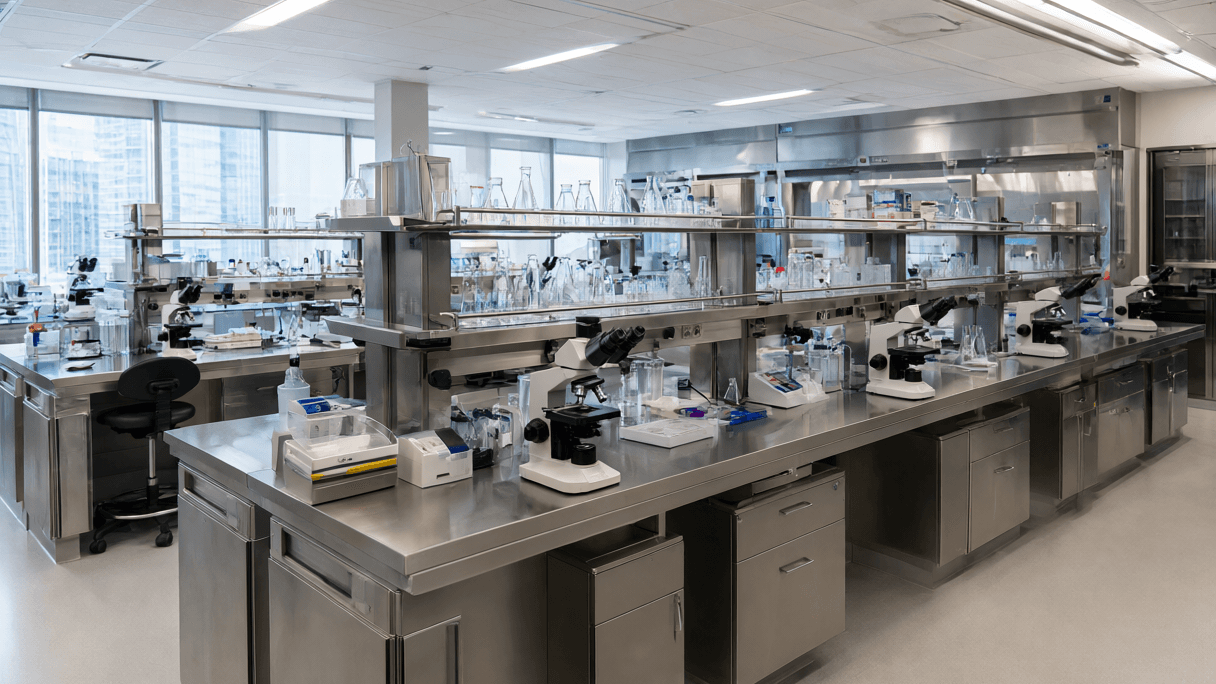
AI-generated image · US National Wire
The AI firm claims a discovery of a CRISPR-like enzyme system while maintaining human-led physical experiments to mitigate risk.
Anthropic has confirmed the operation of a wet biology lab in the Bay Area, where its AI models are utilized to conduct physical experiments. According to reporting from TechCrunch, the company announced that its AI, Claude, helped identify a new enzyme system found in the DNA of bacteriophages. Anthropic describes this system as having properties similar to CRISPR, enabling the cutting, copying, and pasting of DNA.
CEO Dario Amodei stated on X that Claude identified the system using approximately 950 agents and 210 million tokens over 21 hours of concerted effort. Amodei noted that the discovery built upon previous work from a Stanford team that found a similar system.
Despite the discovery, Anthropic is maintaining a strict boundary between AI analysis and physical execution. TechCrunch reports that all lab work is performed by human scientists in a facility limited to biosafety risk levels BSL-1 and BSL-2, specifically avoiding pathogens that can infect humans. While Amodei suggested that Claude could eventually autonomously control lab equipment with proper safeguards, he confirmed the company is not doing that currently.
This cautious integration follows public admissions from AI executives, including Amodei, regarding the potential dangers of highly capable models. Amodei has specifically cited concerns regarding the use of AI for bioterrorism, even as he predicts AI will cure most diseases within five to ten years. This development occurs as other institutions, including Google, Stanford, and UC San Francisco, continue to integrate AI into biological research.