
AMD's Record Quarter Masks a Gaming Collapse

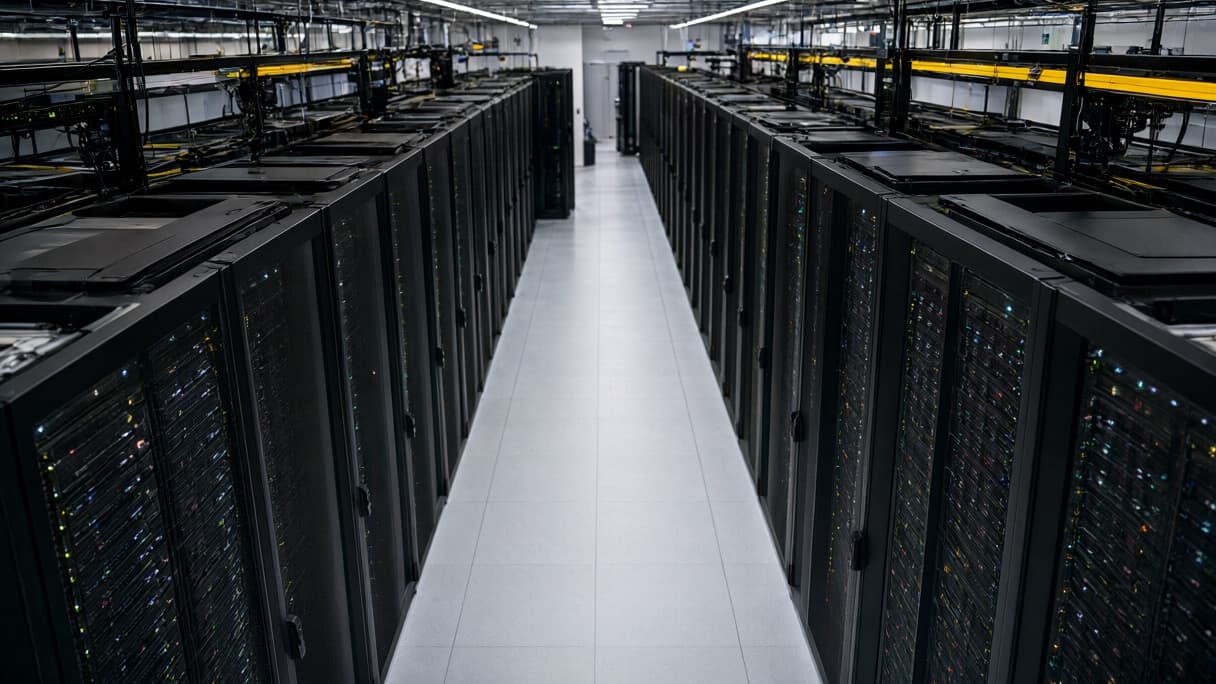
AI-generated image · US National Wire
While data center revenue nearly doubles to fuel a historic growth trajectory, AMD's gaming segment craters, signaling a shift toward AI hardware dominance.
AMD reported a record third-quarter revenue of $13.4 billion, marking a 45 percent increase year over year, as Ars Technica first reported. However, the company's financial health is now defined by a stark divergence: while its data center business is surging, its gaming sector is in freefall.
According to reporting from Ars Technica, AMD's gaming revenue plummeted 40 percent year over year to $773 million. AMD Chair and CEO Lisa Su attributed this decline primarily to lower semi-custom sales, noting that such a drop was expected at this stage of the current console cycle. The gaming segment, which encompasses Radeon graphics and semi-custom processors for consoles, suffered from lower graphics and semi-custom revenue, though the company did not provide a specific split between those two categories.
In contrast, the data center segment grew 97 percent year over year to reach a record $8.5 billion. AMD credited this expansion to the launch of Instinct MI450 series GPUs and demand for EPYC enterprise server CPUs. The company's data center operating margins expanded from 25 percent to 34 percent, resulting in an operating income surge of 168 percent to $2.88 billion. CEO Lisa Su noted that the company began shipping MI455X in volume during the quarter, with lead customers including Microsoft, Meta, OpenAI, Oracle, and Anthropic.
This pivot toward AI and enterprise hardware is further evidenced by AMD's upcoming product roadmap. The company highlighted the AMD Threadripper Halo Station, slated for a 2027 release, which pairs a Threadripper 9995WX CPU with up to four Instinct MI350P GPUs to run trillion-parameter LLMs locally. Additionally, AMD announced "Project Zenith," a developer-focused Windows experience utilizing the Ryzen AI Max+ PRO 495 processor, capable of running 300 billion-parameter models.
Other segments of the business showed steady growth. The Client business, which includes desktop Ryzen processors, posted $2.95 billion in revenue (up 7 percent), driven by Ryzen mobile chips. The Embedded segment, covering FPGAs and SoCs for industrial, automotive, communications, and aerospace and defense markets, rose 29 percent to $1.1 billion.
Looking ahead, AMD CFO Jean Hu provided Q4 revenue guidance of approximately $17 billion, plus or minus 3%. This represents a projected 66 percent year-over-year growth. As reported by Tom's Hardware, Intel's Q4 guidance is between $15 billion and $16 billion. If both companies meet these projections, AMD will have exceeded Intel's revenue for the first time in the company's history.